What Years of Wikipedia Editing Experience Teach About Article Approval
People often talk about Wikipedia approval as though there were a formula known only to experienced editors. There is no...
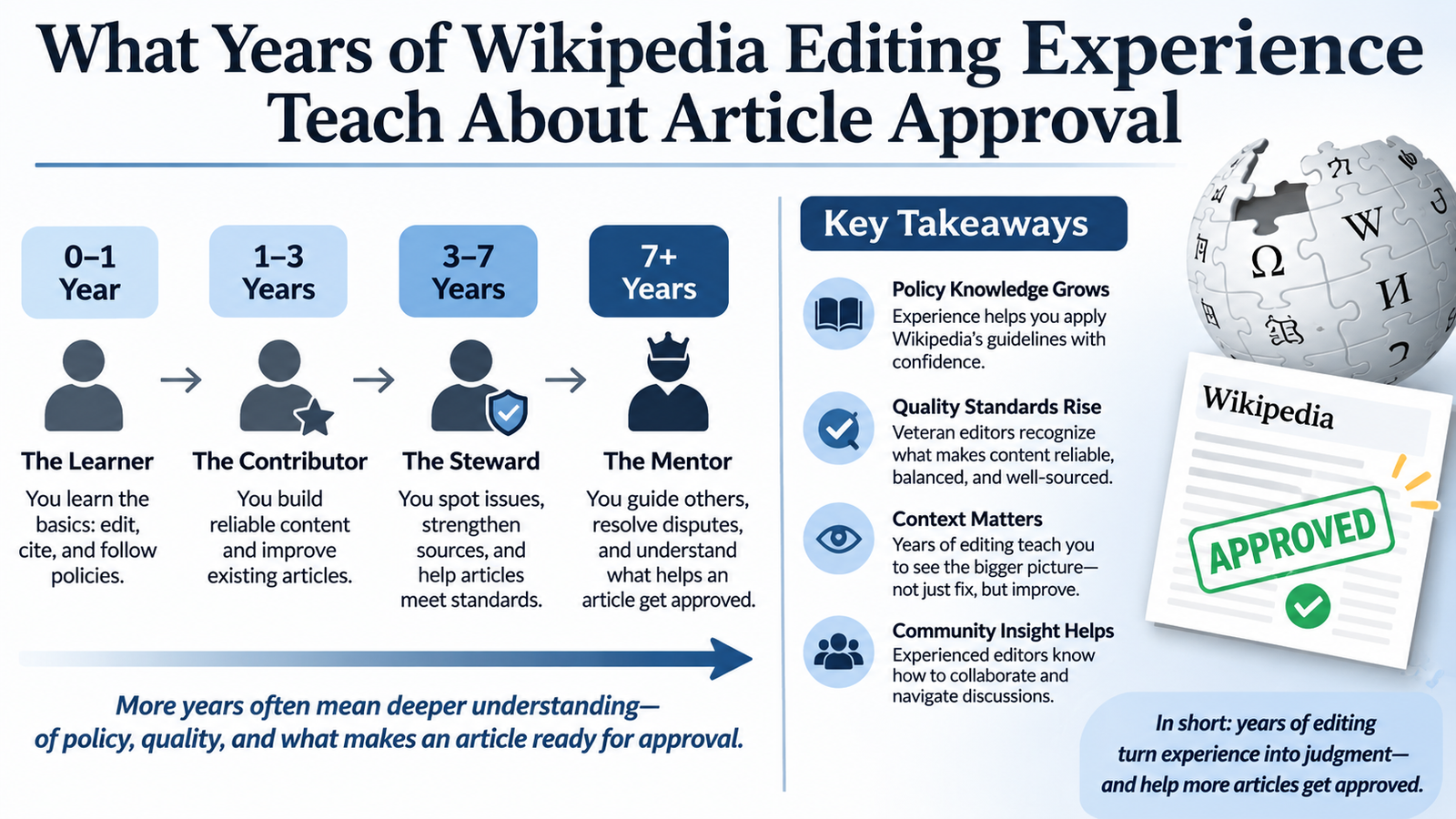
People often talk about Wikipedia approval as though there were a formula known only to experienced editors. There is no private route around community review. What careful editing practice does teach is how to recognise weak evidence, write neutral prose, and respond to feedback without turning an article into a promotional dispute. Those lessons are transferable even when every subject presents a different set of facts.
A responsible discussion of wikipedia writing services should focus on observable editorial practice rather than unverified claims about successful projects or years of personal experience. No consultant can speak for Wikipedia’s volunteer community. What can be explained is why drafts supported by substantive independent coverage are more defensible than drafts built around advertising language, copied biographies, or superficial references.
The strongest draft begins before drafting
Experienced research practice places the source assessment first. A draft should not be built around the subject’s preferred biography and then decorated with references afterward. Instead, read the independent coverage, identify the main themes those sources establish, and choose a structure that follows the evidence. This prevents the common problem of writing impressive claims that the citations cannot support. It may also reveal that the proposed subject does not have enough coverage for a separate page at all.
Shorter can be more encyclopedic
Length is not proof of quality. Many weak drafts contain extensive product descriptions, career timelines, award lists, and repeated statements of importance. A focused article can be more useful if it explains the subject’s background, documented significance, and relevant context in proportion to the available evidence. Removing unsourced or promotional detail often improves a draft more than expanding it. The right length follows the depth of the sources, not a minimum word count promised in a sales package.
Neutral tone requires editorial restraint
Neutrality does not mean avoiding every critical detail. It means representing significant published perspectives fairly and in proportion to reliable sources. An article praising a company in every section may be incomplete when independent reporting also documents setbacks or controversy. Likewise, an article built entirely around a dispute can be unbalanced if it ignores substantial contextual coverage. The writer’s task is to summarise what reputable independent sources say, not to defend or attack the subject.
Review feedback is evidence, not an insult
Draft reviews may identify unclear sourcing, excessive publicity, or insufficient evidence of notability. A productive response is to evaluate the exact concern and revise accordingly. Adding more links when the issue is promotional wording can miss the point. Rewriting the introduction when the issue is weak independent coverage does not solve it either. Professional judgement means separating a correctable drafting problem from a deeper evidentiary limitation. Sometimes the appropriate outcome is to withdraw or postpone a submission.
A published page is not a purchased asset
Clients comparing wikipedia page creators may encounter promises of permanent publication, ownership, or protection from criticism. Such promises misunderstand how Wikipedia works. Once published, an article can be improved, challenged, merged, or nominated for deletion according to community processes. No external service owns the content or controls future edits. Honest service descriptions distinguish deliverables a consultant can provide from decisions only uninvolved editors can make.
Paid editing requires transparency
The Wikimedia Foundation requires paid contributors to disclose their employer, client, and affiliation, and English Wikipedia has conflict of interest guidance. A professional should explain these obligations before attempting changes. Making multiple undisclosed accounts to create the appearance of independent agreement undermines trust and can result in sanctions. A sustainable process uses clear disclosure, draft submission, and appropriate edit requests where relevant. Compliance is not an optional detail reserved for a difficult case.
Notability can change with new coverage
A rejection today does not necessarily mean a subject can never merit an article. Later independent investigation, recognised achievements, or substantive historical scholarship may change the evidence. But the additional material must be real reporting, not purchased publicity disguised as editorial interest. This is why maintaining an organised record of independent sources can be more useful than repeatedly resubmitting a draft with minor cosmetic changes. An assessment should be revisited when the source base materially changes.
Good advice is comfortable saying no
Perhaps the clearest lesson is that responsible expertise is not measured solely by how many drafts are submitted. Declining an unsuitable case protects the client from avoidable disappointment and protects the encyclopedia from promotional content. Explain the available sources, the applicable guidelines, and the uncertainties. A strong advisory relationship begins with an accurate description of the work, not a sales guarantee that the adviser has no power to fulfil.
Good editorial judgement includes proportion
Consider a draft about a technology business whose independent coverage mainly addresses one major acquisition. An inexperienced writer might turn that narrow reporting into a sweeping company history. A more careful approach keeps the description proportionate to what sources actually discuss. The same principle applies to criticism. One minor complaint should not dominate an article unless strong independent coverage demonstrates wider importance, while a significant documented controversy should not disappear because the subject dislikes it. Good writing decisions are therefore connected to source weight, not to a preferred brand story. That habit takes practice, but it can be explained and assessed without claiming personal access to reviewers or a perfect acceptance record.
Final Thoughts
Editorial experience is most useful when it improves judgement. That means checking sources closely, writing only what can be verified, and respecting independent review. Sustainable Wikipedia consulting should be measured by research quality and policy compliance rather than by claims of secret approval methods.