
Thyroid Treatment and Care Services – Improving Health Through Awareness, Early Action, and Personalized Support
Thyroid Treatment and Care Services can help individuals find answers when unexplained physical changes begin to disrupt their usual routines....
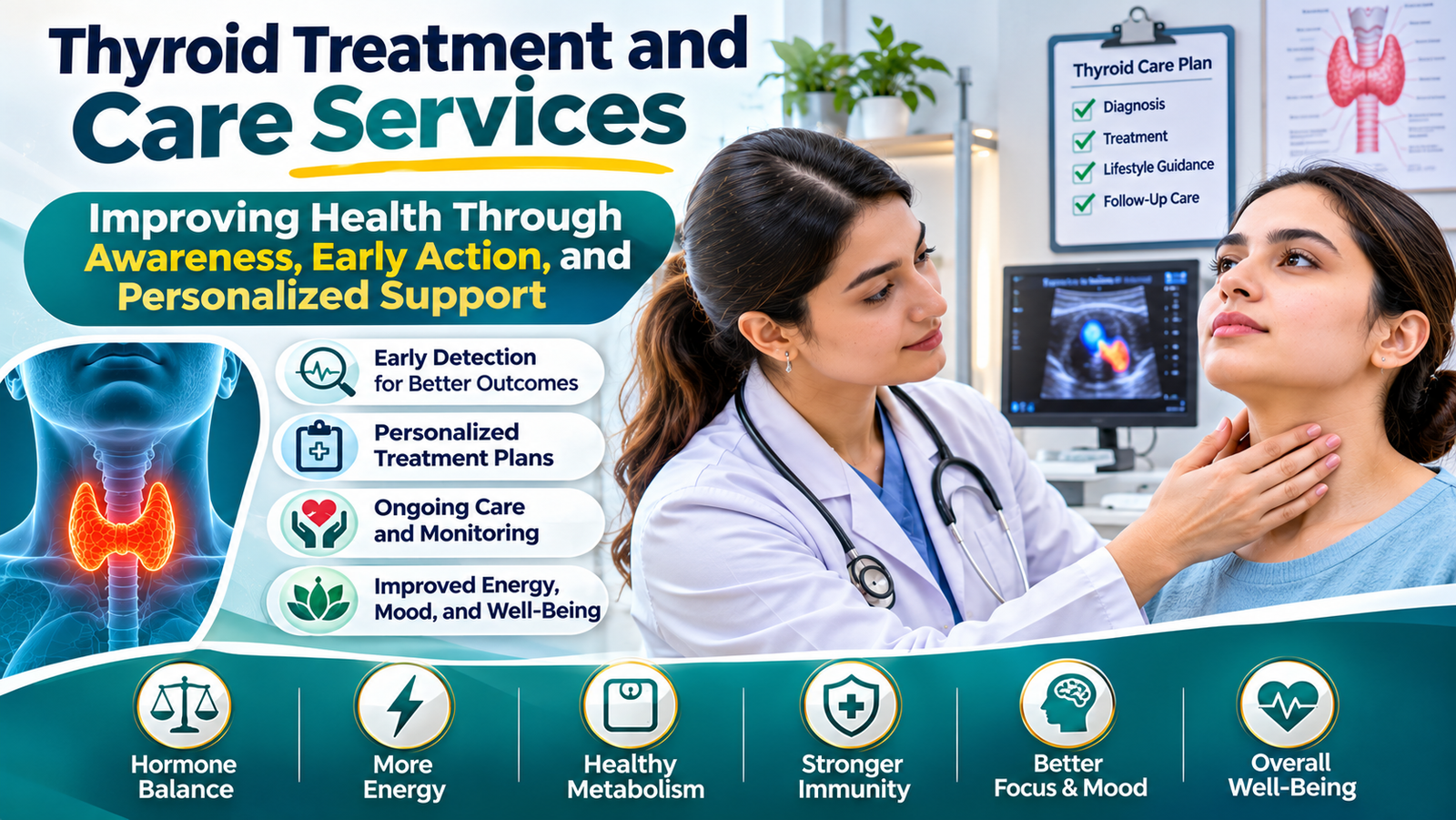
Thyroid Treatment and Care Services can help individuals find answers when unexplained physical changes begin to disrupt their usual routines. Whether someone is struggling with persistent exhaustion, experiencing an uncomfortable heartbeat, or noticing swelling near the neck, understanding the possible causes is an important part of receiving suitable healthcare.
Many thyroid concerns develop gradually. A person might dismiss unusual tiredness as a consequence of demanding work or assume that changes in body temperature are simply related to the weather. These explanations may seem reasonable until the symptoms begin affecting ordinary activities.
Recognizing what deserves attention, understanding medical findings, and knowing which treatment choices are available can make thyroid healthcare easier to navigate.
Why Thyroid Health Is About More Than Hormones
The thyroid contributes to a complex communication system connecting different parts of the body. Located near the windpipe, this gland releases hormones that help coordinate energy use, digestion, temperature regulation, and cardiovascular activity.
Thyroid Treatment and Care Services When thyroid activity becomes insufficient, certain processes may slow down. Increased hormone activity can create different effects, including a faster pulse or greater sensitivity to heat.
However, thyroid disease is not limited to hormone imbalance. The gland may develop inflammation, enlargement, or tissue changes that require a separate type of assessment.
Understanding this distinction matters because an abnormal thyroid finding does not always have the same medical significance or require the same response.
Recognizing Changes Before They Disrupt Everyday Life
Thyroid-related symptoms can be difficult to interpret because they often resemble familiar health complaints.
Someone experiencing reduced thyroid activity might notice difficulty staying warm, irregular bowel movements, or changes in skin texture. An overactive thyroid may cause excessive sweating, trembling hands, or unexplained weight loss.
Some individuals also experience changes in mood, concentration, or menstrual regularity.
Rather than focusing on one isolated complaint, medical professionals consider how symptoms developed and whether they occur together.
For example, persistent palpitations accompanied by heat intolerance may suggest a different problem from tiredness combined with cold sensitivity.
A medical consultation can help determine whether these patterns require thyroid investigations or another form of assessment.
Thyroid Treatment and Care Services and the Importance of Meaningful Testing
A thoughtful diagnostic process starts with deciding what information is genuinely needed.
Thyroid-stimulating hormone, known as TSH, is commonly measured when thyroid dysfunction is suspected. Its result helps determine whether additional measurements, such as free T4 or free T3, may be useful.
Other investigations serve different purposes. Antibody tests can support the assessment of certain autoimmune disorders, while ultrasound imaging helps examine a suspicious lump or enlargement.
A laboratory result should never be considered without the surrounding clinical information.
Recent illness, medication use, and particular supplements can influence thyroid measurements. High-dose biotin, for example, may interfere with some laboratory methods.
Selecting tests for a clear medical reason helps patients receive useful information without unnecessary investigations.
Understanding What Different Thyroid Diagnoses Mean
Two frequently discussed conditions are hypothyroidism and hyperthyroidism, but their causes and management differ considerably.
Hypothyroidism occurs when the body has an inadequate thyroid hormone supply. Hashimoto’s thyroiditis, previous thyroid treatment, and other medical factors may contribute.
Hyperthyroidism involves excessive hormone production. It can develop through Graves’ disease or certain overactive thyroid nodules.
Thyroid inflammation creates another possibility. In some cases, stored hormones are released temporarily, producing abnormal measurements that may later change.
A thyroid lump may also be present even when hormone production remains normal.
These differences explain why identifying the precise condition is essential before deciding what kind of care is appropriate.
Choosing a Treatment That Addresses the Actual Problem
For established primary hypothyroidism, levothyroxine is generally the first-choice medicine. It replaces thyroid hormone that the body cannot produce adequately.
Hyperthyroidism requires a different strategy. Depending on its cause, treatment may include antithyroid medication, radioactive iodine, or surgery.
Some temporary thyroid disorders require symptom control or observation rather than long-term hormone therapy.
A mildly abnormal blood result may also lead to repeat testing before medication is considered.
Age, pregnancy, other medical conditions, and the potential effects of treatment all influence the recommendation.
Understanding why a particular option has been selected allows patients to approach treatment with clearer expectations.
What Patients Should Know About Thyroid Nodules
Discovering a lump near the thyroid can be unsettling, particularly when additional investigations are suggested.
Fortunately, most thyroid nodules are benign. Their appearance, associated symptoms, and clinical characteristics help determine whether further examination is necessary.
Ultrasound provides information about a nodule’s internal features. Some findings warrant a fine-needle aspiration biopsy, while others can be observed without immediate intervention.
Selected benign nodules causing pressure or discomfort may be suitable for minimally invasive procedures.
However, new swallowing difficulties, persistent hoarseness, or rapidly increasing neck swelling should receive medical attention.
The purpose of evaluation is to identify concerning changes while avoiding procedures that offer no clear benefit.
How Modern Thyroid Treatment and Care Services Are Evolving
Modern Thyroid Treatment and Care Services are moving toward a more selective and patient-focused approach.
Greater attention is being given to the difference between detecting an abnormality and establishing whether treatment would be beneficial.
For example, minor changes in thyroid blood results may require confirmation rather than immediate medication.
Newer techniques, including radiofrequency ablation for selected benign nodules, have also expanded the options available to some patients.
Another important development is the growing use of shared decision-making. Patients can discuss potential benefits, limitations, and personal priorities before agreeing to a treatment.
These improvements encourage appropriate care without assuming that more testing or intervention always produces better outcomes.
Understanding Thyroid Health During Pregnancy
Pregnancy introduces special considerations because thyroid hormones contribute to maternal health and fetal development.
Women already receiving thyroid replacement may need changes to their medication during pregnancy.
Some thyroid conditions can also develop or become apparent after childbirth. Postpartum thyroiditis, for example, may temporarily affect hormone activity.
Updated international guidance published in 2026 addresses thyroid assessment and management before conception, throughout pregnancy, and during the postpartum period.
Treatment decisions depend on the individual’s medical history, pregnancy stage, and laboratory findings.
Discussing an existing thyroid condition before pregnancy can help identify important medical considerations early.
Supporting Health Without Relying on Unproven Remedies
Online information frequently promotes supplements, restrictive eating plans, and products claiming to restore thyroid function naturally.
Such recommendations should be approached carefully.
Iodine is required for thyroid hormone production, but taking excessive amounts can aggravate certain thyroid disorders. Additional selenium is not routinely necessary for everyone with thyroid disease.
A varied diet can support general nutritional health, while physical activity contributes to fitness and emotional well-being.
These habits are useful alongside appropriate medical treatment, not as replacements for it.
Patients should also discuss new supplements with their prescriber because some products can affect thyroid medication absorption or laboratory results.
Making Treatment Easier to Understand and Follow
A thyroid diagnosis can introduce unfamiliar medical terminology and uncertainty about future healthcare needs.
Patients may wonder whether medication will be temporary, which symptoms deserve attention, or how treatment progress is assessed.
Clear instructions and understandable explanations help answer these concerns.
For people receiving levothyroxine, taking the medicine consistently and following guidance about food and supplement interactions is important.
Laboratory monitoring helps determine whether treatment remains appropriate. The need for testing varies according to the condition and stage of treatment.
If symptoms persist despite suitable thyroid results, other medical explanations may also need consideration.
Conclusion
Thyroid Treatment and Care Services contribute to better health by helping individuals understand thyroid conditions and identify appropriate medical options. From investigating unexplained symptoms to managing diagnosed disorders, effective care depends on recognizing the specific problem and responding thoughtfully.
Developments in diagnostic assessment, selected procedures, and patient participation continue to improve how thyroid healthcare is delivered.
Reliable information, suitable medical treatment, and an understanding of personal health needs can help individuals manage thyroid concerns while maintaining confidence in their everyday lives.