
What’s the Difference Between a Pilates Community and a Structured Pilates Mentorship Program?
A group chat full of fellow instructors sharing tips is not the same thing as a mentorship program, even though...
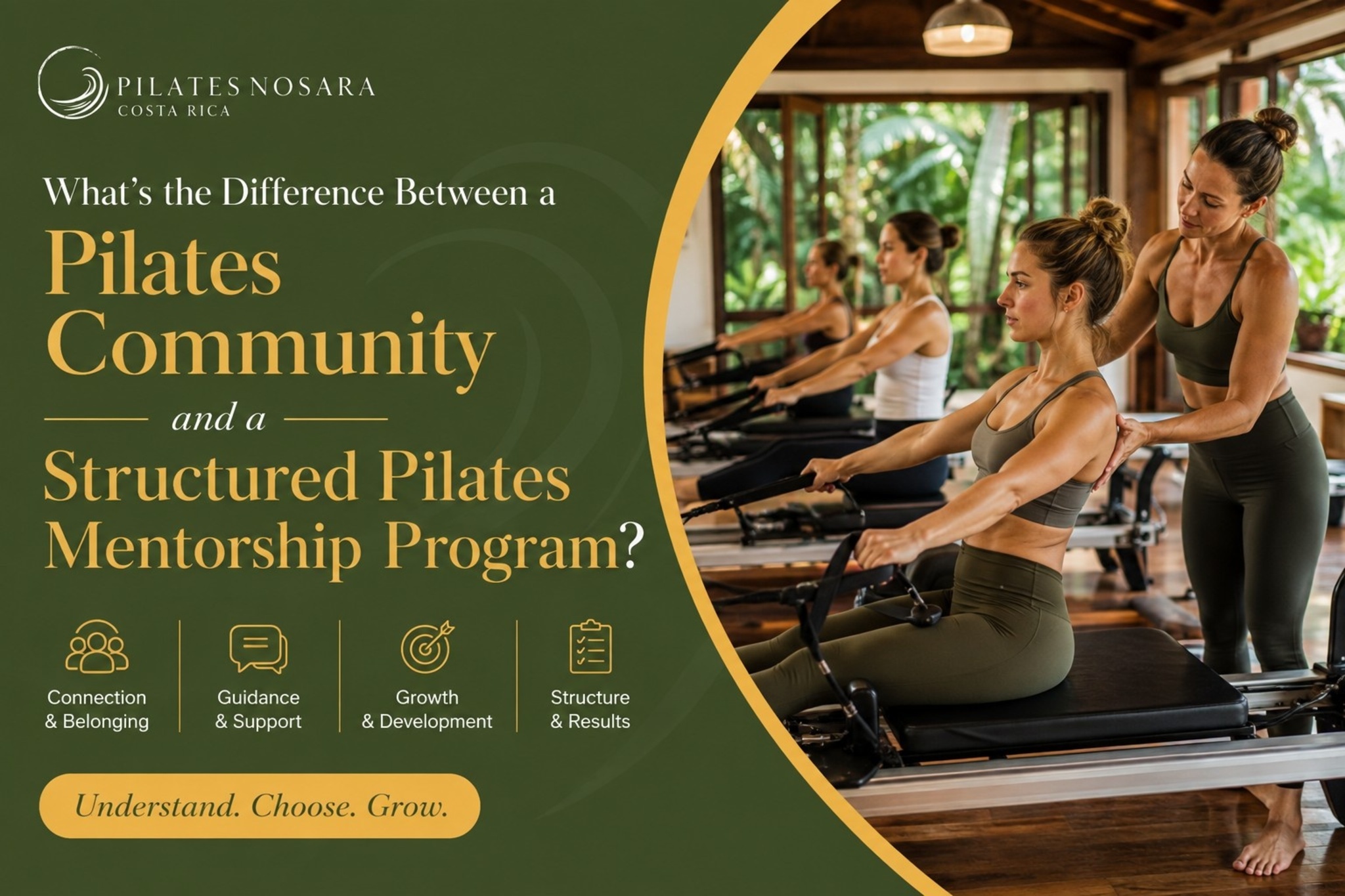
A group chat full of fellow instructors sharing tips is not the same thing as a mentorship program, even though both get lumped under the same casual label. Knowing the actual difference matters more than it seems, especially for instructors trying to figure out where to invest their limited time.
A Pilates mentorship program offers structure, accountability, and a defined path forward. A community offers connection and shared experience, which is valuable, but rarely enough on its own to move a teaching career forward in a measurable way.
What a Community Actually Provides
Communities form naturally around shared struggle. Instructors trade advice about difficult clients, swap class playlists, or vent about a tough training week, and all of that has real value for morale and connection.
What communities rarely offer is a consistent curriculum or a person accountable for your specific progress. Advice tends to be reactive, answering whatever question comes up that day, rather than following a deliberate sequence built around actual skill gaps.
What a Structured Mentorship Program Adds on Top
A mentorship program builds on the same sense of connection a community offers, then adds intentional structure around it. Instead of scattered advice, a mentorship program typically walks instructors through specific skill areas over time, from technical cueing to class planning to the harder, less tangible work of holding space for a room.
- Consistent curriculum instead of reactive, one-off advice
- Direct accountability to a mentor tracking actual progress
- Access to a mentor’s accumulated experience, sometimes decades of teaching
- A defined path for instructors to eventually own their teaching voice, rather than copying someone else’s style indefinitely
Why This Distinction Matters More After Certification
Fresh graduates often assume finishing certification is the hard part, only to discover the real learning curve starts once they are teaching real clients without a supervisor watching. This is exactly the gap a structured mentorship program is designed to close, at a stage when a loose community of peers usually cannot offer enough depth.
Programs like Pilates Compass exist specifically for this transition period, offering both new graduates and seasoned instructors ongoing access to cueing guidance, class planning support, and the kind of presence coaching that rarely gets covered in initial training. Pricing for this kind of ongoing access runs around $37 a month or $370 annually, a modest investment against the cost of plateauing quietly for years without direction.
Where a Pilates Studio Environment Still Plays a Role
Even with strong online mentorship available, a physical Pilates studio Nosara still matters for certain kinds of feedback that simply do not translate through a screen. Hands-on correction, spotting subtle compensations in a client’s movement, and reading a room’s energy in real time are skills best sharpened in person.
This is exactly why many mentorship structures offer both online and in-person tracks rather than forcing a choice between the two. In-person mentorship inside an actual studio setting lets a mentor watch an instructor teach live, catching habits that would be invisible in a written check-in or a video call.
Choosing Between the Two, or Combining Both
Most instructors do not need to pick community or mentorship exclusively. The strongest approach usually combines both, using a community for daily connection and morale, while relying on a structured mentorship program for actual skill development and accountability.
A few questions help clarify which one an instructor needs most right now:
- Are you looking for daily encouragement, or a defined path toward a specific teaching skill
- Do you already have a mentor figure, or are you relying entirely on peer advice
- Would in-person correction inside a studio setting help more than online guidance right now
Instructors who treat mentorship as optional tend to plateau quietly, repeating the same class structure for years without realizing it. Those who invest in structured guidance, alongside the informal support of a community, tend to grow into more confident and adaptable teachers over time.
FAQs
Can a Pilates community replace the need for formal mentorship?
Not entirely, since communities rarely offer the structured curriculum and accountability a mentorship program provides.
Is online mentorship enough, or is in-person guidance still necessary?
Both have value, and many instructors benefit from combining online mentorship with occasional in-person correction.
How much does a structured mentorship program typically cost?
Programs vary, though ongoing memberships often run in the range of thirty to forty dollars monthly, with discounted annual options.
Do new instructors need mentorship immediately after certification?
Many benefit from starting soon after certification, since the transition to independent teaching is often the hardest stretch.
Can experienced instructors still benefit from a mentorship program?
Yes, seasoned teachers often use mentorship to refine their voice rather than to learn basic skills again.