
Maternal Screening Test: What Every Parent Should Know
Pregnancy is a time of excitement and hope, but it can also bring questions about your baby’s health. Fortunately, modern...
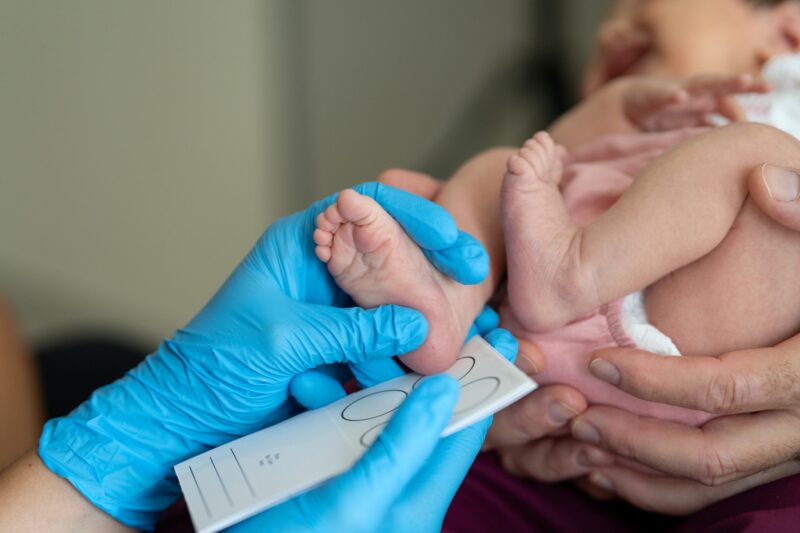
Pregnancy is a time of excitement and hope, but it can also bring questions about your baby’s health. Fortunately, modern medicine offers tools to provide early insights. One of the most common and valuable tools is the maternal screening test. This simple blood test helps identify pregnancies that may be at higher risk for certain chromosomal conditions. In this guide, we explain what this test is, why it matters, and how MedGenome supports expectant parents with reliable screening.
What Is a Maternal Screening Test?
A maternal screening test is a non‑invasive blood test performed on a pregnant woman. It measures specific substances in the mother’s blood, such as pregnancy‑associated plasma protein‑A (PAPP‑A) and human chorionic gonadotropin (hCG) in the first trimester. In the second trimester, it may measure alpha‑fetoprotein (AFP), estriol, hCG, and inhibin A (the “quad screen”). These levels, combined with the mother’s age, weight, and ultrasound findings, are used to calculate the risk of the baby having chromosomal abnormalities like Down syndrome (Trisomy 21) or Edwards syndrome (Trisomy 18). It is important to remember that this is a screening, not a diagnostic test – it provides a risk estimate, not a definite answer.
Why Is a Maternal Screening Test Important?
The maternal screening test offers several key benefits:
- Early Information – It can be performed as early as 11 weeks of pregnancy, giving parents time to make informed decisions.
- No Risk to Baby – The test only requires a blood draw from the mother, making it completely safe.
- Risk Assessment – It helps identify pregnancies that may need further diagnostic testing, such as chorionic villus sampling (CVS) or amniocentesis.
- Peace of Mind – A low‑risk result provides reassurance, while a high‑risk result allows for preparation and additional testing.
How Is the Test Performed?
The maternal screening test is straightforward. A healthcare provider draws a small amount of blood from the mother’s arm. The sample is sent to a laboratory where levels of specific markers are measured. Results are typically available within a few days to a week. For first‑trimester screening, the test is often combined with a nuchal translucency (NT) ultrasound, which measures fluid at the back of the baby’s neck. This combination improves accuracy.
Understanding Your Results
Results of a maternal screening test are reported as a risk ratio (e.g., 1 in 500). A common cutoff for “screen‑positive” is 1 in 250 or 1 in 270. A low‑risk result means the chance of a chromosomal abnormality is low, but not zero. A high‑risk result means the chance is higher than the cutoff, but most babies with high‑risk results are actually healthy. Only about 5% of screened women receive a high‑risk result, and among them, only a small fraction have a baby with a condition.
MedGenome’s Role in Maternal Screening
MedGenome is a leading genomics company in India, offering advanced prenatal screening services. Their maternal screening test is performed in CAP‑ and NABL‑accredited laboratories, ensuring high accuracy and reliability. MedGenome provides first‑trimester combined screening (PAPP‑A, free β‑hCG, and NT ultrasound interpretation) as well as second‑trimester quad screening. With a pan‑India sample collection network and expert genetic counselling support, MedGenome helps expectant parents navigate their options with confidence.
What to Do After a High‑Risk Result
If your maternal screening test shows a high‑risk result, do not panic. It simply means your doctor will recommend follow‑up diagnostic tests, such as CVS (performed between 11‑14 weeks) or amniocentesis (performed after 15 weeks). These tests analyze the baby’s actual chromosomes and can confirm or rule out a condition. MedGenome offers genetic counselling to help you understand your results and make informed decisions about next steps.
Conclusion
A maternal screening test is a safe, early, and effective way to assess your baby’s risk for common chromosomal conditions. It empowers you with information and allows for timely decisions. With MedGenome’s accurate testing and expert support, you can approach your pregnancy journey with greater peace of mind. Speak with your obstetrician or contact MedGenome to learn more about including this test in your prenatal care.
Frequently Asked Questions (FAQs)
1. When should I have a maternal screening test?
First‑trimester screening is typically done between 11 and 14 weeks of pregnancy. Second‑trimester screening (quad screen) is done between 15 and 22 weeks.
2. Is the maternal screening test mandatory?
No, it is optional. Your doctor can help you decide whether it is right for you based on your age, family history, and personal preferences.
3. How accurate is the maternal screening test?
First‑trimester combined screening (blood test + NT ultrasound) detects about 85‑90% of Down syndrome cases, with a false‑positive rate of about 5%. It is a screening, not a diagnosis.
4. Does a high‑risk result mean my baby has a problem?
No. A high‑risk result only indicates an increased chance. Most women with high‑risk results have healthy babies. Further diagnostic testing is needed to confirm.
5. Does MedGenome offer the maternal screening test across India?
Yes, MedGenome has a wide network of collection centres across India. You can contact them to find a nearby location and schedule your test with expert support.