
The Role of AI and Big Data in Modern Mobile Telecommunications Services
Introduction The mobile telecommunications industry is undergoing a transformative evolution, fueled by the integration of artificial intelligence (AI) and big...
Introduction
The mobile telecommunications industry is undergoing a transformative evolution, fueled by the integration of artificial intelligence (AI) and big data technologies. As user demands increase and networks become more complex, telecom companies are leveraging these advanced technologies to enhance service delivery, optimize operations, and stay competitive. This article explores how AI and big data are reshaping modern mobile telecommunications services and what this means for consumers and service providers alike.
Definition
Mobile Telecommunications Services refer to wireless communication services that enable the transmission of voice, data, and multimedia over mobile networks. These services include mobile phone calls, text messaging (SMS), internet access, and app-based communication, typically delivered through cellular networks using technologies like 4G, 5G, and beyond.
The Growing Complexity of Mobile Telecom Services
Modern mobile telecommunications networks support billions of users, connecting devices ranging from smartphones to IoT-enabled sensors. With the emergence of 5G, edge computing, and smart devices, the complexity of network management, data handling, and customer service has intensified. Telecom providers are now required to deliver high-speed, reliable, and personalized services while managing enormous volumes of data in real-time.
This is where AI and big data play a pivotal role. Together, they empower telecom providers to intelligently manage operations, forecast demand, and personalize experiences for customers.
AI and Big Data: A Synergistic Pair
AI and big data are closely intertwined. AI requires massive datasets to learn and make intelligent decisions, while big data becomes useful when analyzed using AI algorithms. In the mobile telecom sector, this synergy translates into actionable insights that drive efficiency, innovation, and customer satisfaction.
Big data provides telecoms with information about user behavior, network performance, device usage, and service feedback. AI then analyzes this data to detect patterns, predict outcomes, and automate decisions across various functions, from network optimization to fraud prevention.
Enhancing Network Management and Optimization
One of the most critical applications of AI and big data in telecommunications is network management. AI-powered systems can monitor traffic patterns, predict congestion points, and dynamically allocate resources to ensure optimal performance.
Predictive Maintenance:
By analyzing historical and real-time network data, AI algorithms can predict equipment failures before they happen. This predictive maintenance reduces downtime and minimizes service disruptions, saving both time and money.
Dynamic Network Configuration:
AI enables self-optimizing networks (SONs), which can adapt in real time to changing traffic conditions. These networks autonomously manage bandwidth, switch channels, and reroute data flows to maintain quality of service (QoS).
Personalized Customer Experiences
AI and big data have revolutionized customer service and personalization in mobile telecom. By analyzing customer interactions, browsing habits, and usage patterns, service providers can offer tailored plans and real-time support.
AI-Powered Chatbots and Virtual Assistants:
Many telecom companies use AI chatbots to handle routine customer queries, provide technical support, and guide users through service setup. These bots are available 24/7 and continually improve with each interaction.
Personalized Offers and Recommendations:
Big data analytics allows telecoms to segment their user base and provide customized pricing plans, promotions, and content. This not only enhances customer satisfaction but also boosts sales and loyalty.
Fraud Detection and Cybersecurity
With increasing digital activity, telecom providers face growing threats related to fraud and cybersecurity. AI and big data analytics provide robust tools for identifying and mitigating these risks.
Real-Time Fraud Detection:
AI algorithms can detect anomalies in usage patterns – such as sudden spikes in data usage or irregular call behavior – that may indicate fraudulent activity. These systems can trigger alerts or automatically block suspicious transactions.
Enhanced Cybersecurity:
Telecom networks are prime targets for cyberattacks. By analyzing vast amounts of network data, AI can identify potential threats, recognize attack signatures, and initiate countermeasures in real time, ensuring stronger network security.
Improving Customer Retention and Reducing Churn
Churn prediction is a major focus for mobile telecom operators, as retaining existing customers is often more cost-effective than acquiring new ones. AI and big data provide powerful tools to address this challenge.
Churn Prediction Models:
By analyzing past behaviors, complaints, billing issues, and service usage, AI can identify customers at risk of leaving. Telecoms can then proactively offer incentives, better plans, or personalized engagement to retain them.
Sentiment Analysis:
Natural Language Processing (NLP), a subset of AI, allows companies to perform sentiment analysis on customer feedback, social media posts, and support calls. Understanding customer sentiment helps telecoms improve service quality and brand perception.
Driving Innovation in 5G and Beyond
AI and big data are instrumental in the rollout and management of 5G networks. The complexity and scale of 5G require advanced systems to manage dynamic and decentralized infrastructures.
AI in 5G Network Slicing:
5G enables network slicing, which allows the creation of multiple virtual networks for different applications. AI helps manage these slices by allocating resources efficiently based on real-time demands.
Supporting IoT Ecosystems:
With billions of connected IoT devices, AI and big data ensure reliable performance by managing traffic, predicting device behavior, and preventing service bottlenecks.
Operational Efficiency and Cost Savings
Beyond customer-facing benefits, AI and big data help telecom providers streamline internal processes and reduce operational costs.
Automated Workflows:
AI automates routine tasks such as ticketing, provisioning, and billing, reducing the burden on human agents and improving accuracy.
Efficient Resource Allocation:
Data-driven insights enable better planning of infrastructure investments, marketing campaigns, and workforce management, contributing to more efficient operations and higher ROI.
Challenges and Considerations
While the benefits are significant, there are also challenges in implementing AI and big data in telecom services.
- Data Privacy: Handling sensitive customer data requires strict adherence to privacy regulations like GDPR and CCPA.
- Integration Complexity: Legacy systems must be upgraded or integrated with modern AI platforms, which can be costly and time-consuming.
- Talent Gap: There’s a growing need for skilled professionals in AI, machine learning, and data science within the telecom sector.
Addressing these challenges is crucial to unlocking the full potential of AI and big data in telecom.
The Road Ahead
The convergence of AI, big data, and mobile telecommunications is still in its early stages. As technologies mature and adoption deepens, we can expect even more innovative applications – such as fully autonomous networks, immersive AR/VR communications, and next-gen customer engagement platforms.
For telecom companies, staying ahead means embracing these technologies not just as tools, but as strategic enablers of future growth.
Growth Rate of Mobile Telecommunications Services Market
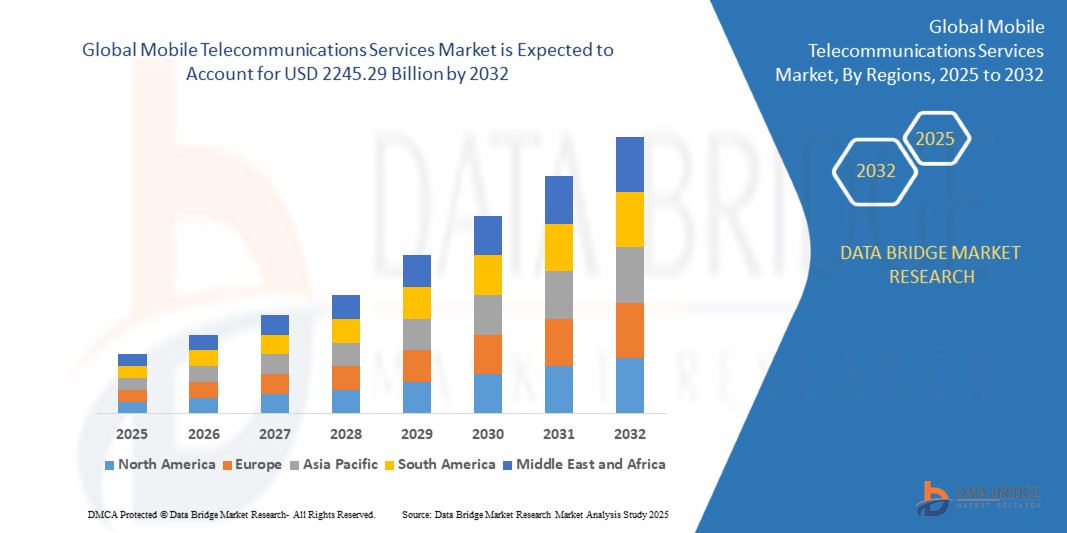
According to Data Bridge Market Research, it is anticipated that the global mobile telecommunications services market would grow from its 2024 valuation of USD 1800.23 billion to USD 2245.29 billion by 2032. The growing need for mobile data services and high-speed internet is expected to fuel the market’s 2.80% compound annual growth rate (CAGR) between 2025 and 2032.
Read More: https://www.databridgemarketresearch.com/reports/global-mobile-telecommunications-services-market
Conclusion
AI and big data are no longer optional in the competitive landscape of modern mobile telecommunications—they are essential. From improving network performance and enhancing customer experiences to enabling predictive analytics and securing infrastructure, these technologies are at the heart of telecom innovation. As telecom services continue to evolve in response to rising user expectations and technological advancements, those who harness the power of AI and big data will lead the way in delivering faster, smarter, and more reliable communication services to the world.