
Smarter Customer Experiences Start with Our AI Concierge Platform
A customer calls with a query, and it takes 3 emails, 2 departments, and a day to solve the problem....
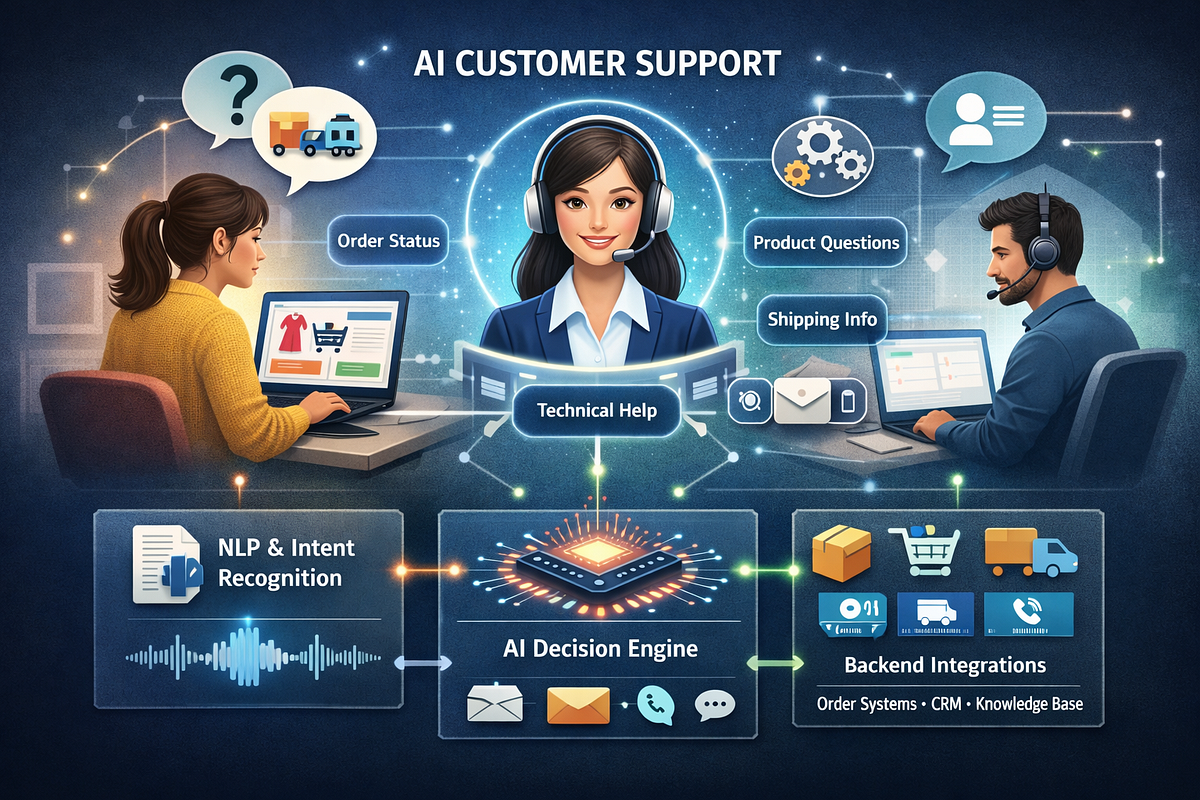
A customer calls with a query, and it takes 3 emails, 2 departments, and a day to solve the problem. That’s the place where a lot of businesses lose their trust, and truthfully, that is where most customer service teams break down as well, being buried with repetitive tickets rather than fixing problems.
This is precisely why customer experiences have become so much a topic of conversation within the past couple of years. This is not about having more agents, or another live chat on your site. It’s about an all-new approach to support — not just an immediate response to the person, but a response to their need, in real-time, on any channel they choose to use.
Which is where AI concierge comes into play, and why more brands have an old-school ‘bot’ on the way out and a new-age ‘customer experience service bot’ on the way in. It’s not about taking out the human element. It’s about avoiding issues that require the involvement of real six-foot-tall, flesh-and-blood personnel, and doing everything else instantly, correctly, and without putting anyone on hold.
Why Traditional Customer Services Models Are Falling Behind
For a long time, customer services was synonymous with the word ‘queue line. A customer makes a request; the request is added to the ticketing system; the customer queues, pending an agent to pick it up. The same can occur in the other channels of communication (email, WhatsApp, social media, phone calls), and the result is disorganized communication where customers have to repeat themselves each time they switch from channel to channel.
This is not because of sloppy or slow support agents. It’s that the system was not built to support the level of customers or the rate of customer throughput that we expect today. People don’t want to wait 24-48 hours for a response. They’ll expect their refund, and they want it now. Customers don’t make a big deal of it when a business can’t provide that speed; they just slip out and find someone else to do business.
This is what a correct artificial intelligence concierge is constructed to bridge. It’s intended to take requests, review the pertinent bookkeeping subtleties, and really perform a move like changing a booking, adjusting a case, managing a refund, and so on in the conversation rather than just responding to inquiries with a ticket number.
What Makes an AI Concierge Different from a Chatbot
When one hears AI concierge, they imagine an automated chatbot that offers some rote responses to questions as found on an FAQ page. This is not what a true and effective one would look like. The only word that difference is: action.
A traditional chatbot can inform a customer about what your return policy states. A human can spell out that particular customer’s order, determine that the customer is eligible, manage the return, and finally send confirmation, without human contact. It’s supposed to know what you’re trying to say, rather than a few key words. It detects emotions: If a client appears to be frustrated, it will escalate instead of continuing through a script. But when it does require a human, it gives up a thread of the conversation with its entire history and context, so no one is left starting from scratch.
The customer-experience platform of today truly addresses this. It is not a matter of replacing the support team; it is a matter of relieving them of the work that isn’t useful and only takes up their day, so they can be super engaged in the conversations that do require judgement, empathy, or creative problem solving.
The Real Business Case for Better Customer Experiences
The component of the whole “AI hype” discussion that seems to be missing here is that this isn’t just a function for customers. “Doing it is a real change. Changing how you operate, and we’ll be able to see it.
A well-established AI concierge can process most incoming requests in seconds, down from hours, leading to quicker resolution times. This is because the system saves the entire conversation, no matter where the conversation began (web chat, WhatsApp, email, or Instagram). Costs are lowered as your team is not overwhelmed with repetitive tickets. Or customer satisfaction levels rise because they get what they’re after, swiftly and hampered free of charge.
Also, there’s a lesser-noticed advantage: consistency! Regardless of how good the human agents are, there are days when they are good and days when they are bad. The AI concierge always executes your policies in the same manner, ensuring a consistent (and fewer errors) support experience customers can trust.
What to Look for in a Customer Experience Platform
When considering a platform, it’s beneficial to understand how to distinguish a platform that aligns with better customer experiences from one that simply provides an additional tool in your tech stack.
Firstly, find something that is effective on all the channels your audience is already using (not your website). It’s about conversations; customers don’t care which channel they are using when interacting with your business, and they most of all do not want to start over when they change.
Secondly, the platform should connect to the other systems you already operate, such as Zendesk, Shopify, HubSpot, Salesforce, or custom-built systems. No one wants to replace the whole tech stack to use something else. A good platform leverages your existing platform.
Third – it should do something, not necessarily answer a question. The true measure is whether you are getting a true AI concierge or just a marginally smarter chatbot in different packaging!
Last, but not least, security is a top priority. If a platform manages customers’ details, refunds, changes of information, or bookings, such protection must exist at the enterprise level and not be used as a solution after thought.
Bringing It All Together
Companies that do this correctly are not only saving money, but they’re also establishing their brand as quick, dependable, and a pleasure to deal with. In a time when customers have infinite options at their fingertips, that reputation is priceless compared to anything you can use to improve it.
Frequently Asked Questions
What exactly is an AI concierge in customer service?
An AI concierge provides an AI-driven system to recognize customer inquiries, source information from relevant accounts, and fulfill tasks such as refunds and booking changes directly, without programming generic responses.
How is a customer experience platform different from regular help desk software?
A help desk is primarily concerned with the organization and tracking of human agents’ tickets. An AI-led customer experience platform actively ends conversations, calling in humans only when they are truly needed.
Will an AI concierge replace my human support team?
Not really; it’s intended to deal with repetitive, high-volume requests and let your team handle intricate or sensitive communications that require the human touch.
Does adopting this kind of platform require replacing our current systems?
Not typically. Most modern platforms are designed to fit in with tools that you are already using, like Shopify, Salesforce, or Zendesk, which means you can launch without a system overhaul at considerable cost.
How quickly can a business see results after implementing an AI concierge?
In fact, many businesses experience quantifiable response time and resolution rate improvements within the first few weeks of the system as it begins to process routine requests almost immediately after setup.
Conclusion
There’s a new mindset amongst customers that’s here to stay, and businesses that do not employ solutions based on customer expectations will continue to fall behind competitors who do. The best part is that you don’t have to abandon anything you have built to close that gap.
It needs the right intelligence over it, which understands your customers, respects your systems, and does get the job done rather than just begins it. That’s the true power of a smarter, more action-centric Customer Experience Platform – and that’s why savvy teams are reaching for this now.