
Beyond Taxi Booking: Building the Next Generation of On-Demand Mobility Platforms
The article extends the discussion of on-demand mobility beyond taxi booking to include the creation of the “next generation” of...
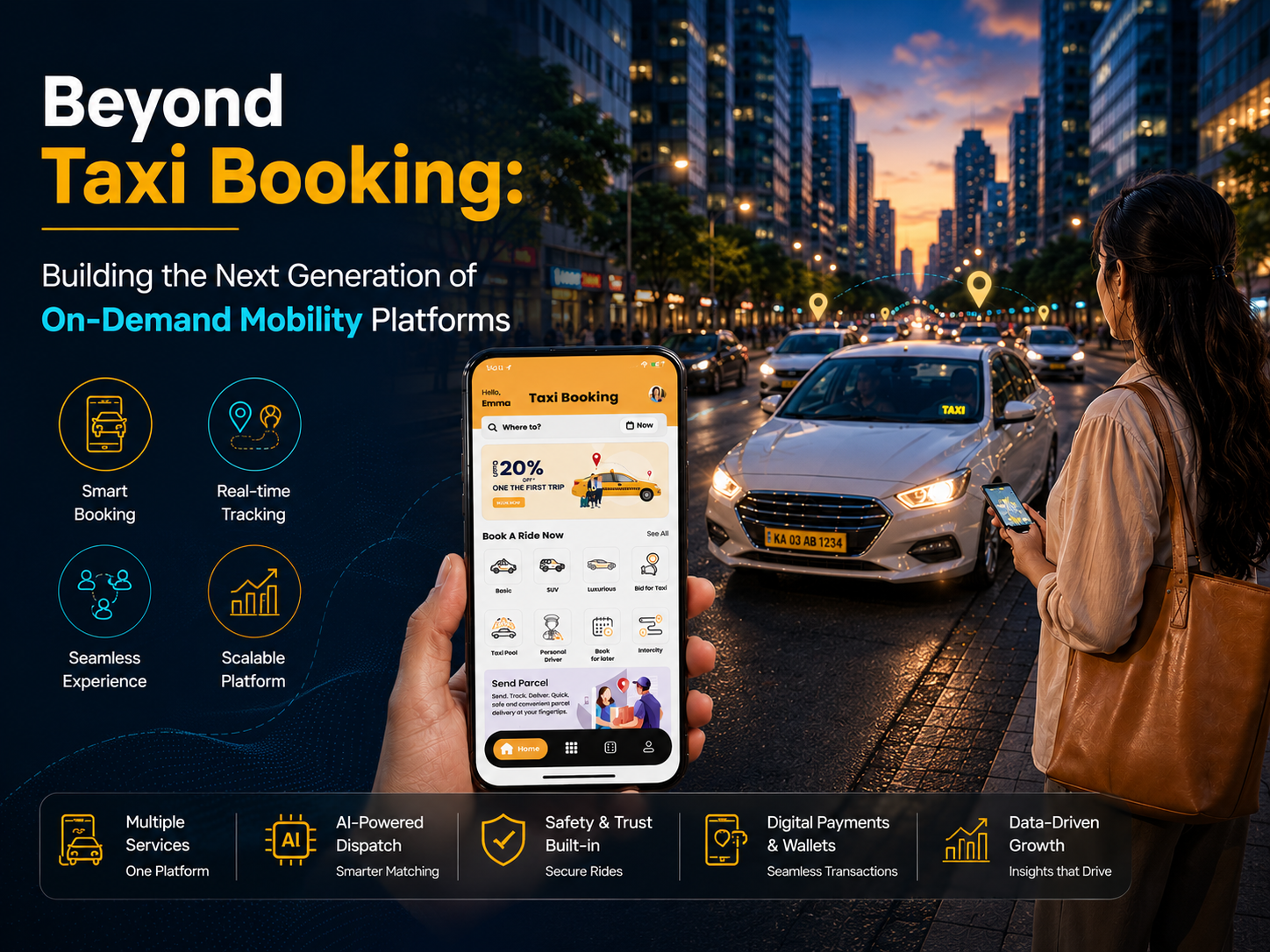
The article extends the discussion of on-demand mobility beyond taxi booking to include the creation of the “next generation” of on-demand mobility platforms.
The “mobility as a service” (MaaS) business has gone well beyond simply booking taxis. Today, consumers demand platforms to provide instant booking, clear pricing, in-time tracking, digital payments, various vehicle selections and customer support. With evolving transportation needs, businesses are progressing toward more fully-fledged mobility platforms than taxi-hailing apps.
On-demand mobility platforms of the future will be flexible, scalable, automated and user-friendly. Whether ride sharing, rides on demand, car rentals, corporate transportation or scheduled rides, these platforms can integrate several mobility services into a single digital service.
The history of On-demand Mobility Platforms
The traditional taxi-booking apps mainly linked passengers to the drivers in their vicinity. Users keyed in their pickup and destination addresses, picked a vehicle, confirmed the booking and drove on.
In the modern age of mobility, this model was extended by combining all of the various transportation services, intelligent dispatch systems, digital wallets, loyalty programs, subscriptions and analytics. The goal is no longer just to reserve a taxi but to make a full mobility experience.
One solution that entrepreneurs can consider is an Uber clone app development that offers extensive features, which can be tailored to meet their business needs.
What’s the difference between a Next-Generation Mobility Platform?
A new mobility platform that integrates transport services, technology and data to deliver an ‘omnivisor’ user experience.
Multi-Service Transportation
Depending on the distance travelled, users might have to take different means of transport. It can offer car hire, bike hire, scooter hire, car rentals, rentals for premium vehicles, shared vehicles, car or bike transfers to and from airports, or scheduled rides.
Multiple services in a single application provides businesses with the ability to cater for various customer segments and provide extra revenue streams.
Real-Time Ride Matching
For an on-demand mobility platform, efficient driver and passenger matching is crucial. With advanced algorithms, these considerations include driver location, availability, EAT, vehicle type, and traffic data.
Matching can help to reduce passenger waiting times and increase vehicle utilisation for drivers.
Dynamic Pricing
Flexible pricing models, such as distance, time, demand, vehicle category and location are available on modern platforms. Promotional fares, loyalty discounts, subscriptions and corporate pricing are other options available for businesses.
These models provide operators with more flexibility and enable them to cater to the fluctuating demand.
Technologies that are driving modern mobility.
The shift from taxi booking apps to full mobility platforms is at the centre of technology.
Artificial Intelligence
Using artificial intelligence and machine learning, transportation data can be analyzed to make predictions, optimize driver allocation, estimate arrival times, and provide custom recommendations.
For instance, platforms can promote more drivers into areas where there is likely to be a high demand, by making them more available.
GPS and Location Intelligence
GPS technology makes it possible to track, optimize routes, provide ETA’s, and deliver location-based services in real-time. This location information can also be used by companies to uncover areas that are not adequately covered and learn about the movement of people.
Digital Payments
Payments are a core function of today’s mobility apps. Payment options include cards, mobile wallets and online banking options that customers expect to be convenient.
Automated payment processing streamlines fare collection and also supports things like digital wallets, promotional credits, refunds and transaction histories.
Informing the creation of a Scalable Mobility Ecosystem.
When designing an on-demand mobility platform, scalability is a crucial feature to consider. Infrastructure needs to be flexible and scalable to accommodate new cities, vehicle types and services for a solution built to serve a specific operation.
By adopting a white label ride-hailing app solution, businesses can get a customized starting point for building their own mobility platform, while minimizing some of the complexities that come with building every app from scratch.
The key elements that make up a Mobility Platform.
A comprehensive mobility platform typically consists of passenger, driver and administrative parts.
Passenger App
The passenger application should include the following features: registration, location detection, vehicle selection, fare estimates, booking, driver tracking, digital payments, trip history, ratings, and customer support.
Other options like saved destinations and preferred payment methods can further enhance convenience.
Driver App
There are tools a driver must have to be able to schedule bookings and work efficiently. These features might include ride notifications, navigation, earnings data, availability controls, trip management, and performance insights.
Admin Dashboard
The admin dashboard serves as the backbone of functionality around the platform. Admins can control customers, drivers, vehicles, bookings, pricing, payments, promotions and reports.
Analytics can provide insights into demand, revenue, cancellations, driver activity, and customer behavior.
Expanding Beyond Ride-Hailing
On-demand mobility isn’t just about moving people. There are integrations for vehicle rentals, corporate transportation, airport transfers, bike sharing, scooter sharing, school transportation, and logistics.
Uber-like app solution could be the base for companies entering the on-demand transport sector and wishing to tailor the app to their own target groups and offerings.
The significance of information and security.The relevance of data and security.
Information is one of the most precious resources for transportation companies. Booking data can provide insights into travel routes, booking patterns, customer preferences, and driver performance.
Safety is also a consideration. Customer trust can be established through driver verification, vehicle information, trip sharing, emergency assistance, ratings, reviews, secure payments and identity authentication.
Monetization Opportunities
There are many ways in which modern mobility platforms can generate revenue, such as:
- The Commission has also been established to count completed rides.
- Subscription plans
- Premium transportation services
- Corporate mobility packages
- Placing the product in advertisements and promotions
- Driver service fees
- Vehicle rental commissions
- Business partnerships
Multiple streams of revenue can be employed to develop sustainable and scalable mobility model.
The future of On-Demand Mobility
Connected services, automated systems, personalisation and multimodal transport will be the underpinnings of the future of mobility. Customers will want to use platforms to find the most convenient way to get to their destination, not just take a taxi.
The use of AI, predictive analytics, connected vehicles and real-time data will continue to shape the ways these mobility platforms operate. A company that invests in technology that is flexible will be better prepared to change with new services and customer expectations.
Conclusion
The transition from conventional taxi services to new-age on-demand mobility is a huge opportunity for transportation companies and tech startups. Today’s platforms can provide users with several mobility services, get them matched intelligently, accept digital payments, track their vehicles in real-time, process analytics and offer a scalable platform and infrastructure.
The opportunity is thus bigger than the development of an additional taxi booking app. Emphasizing flexibility, technology, safety, and customer experience, businesses can create mobility platforms that meet changing transportation demands and can remain viable for future growth.