Full-Grain, Sustainable, or British-Made: How to Choose a Leather Apron
Investing in premium workwear is a definitive milestone for any artisan, chef, or industrial professional. However, walking into the premium...
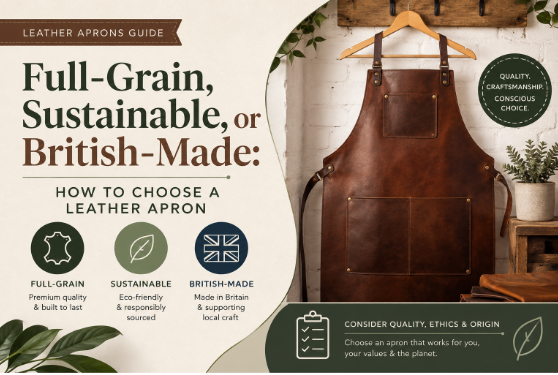
Investing in premium workwear is a definitive milestone for any artisan, chef, or industrial professional. However, walking into the premium leather market can feel overwhelming with the sheer number of options available. When your daily comfort, safety, and brand image are on the line, choosing any random piece won’t cut it. To find a truly reliable shield, you need to understand the core elements that define quality. Here is exactly how to evaluate your options when choosing a full-grain leather apron, balancing ethical standards and manufacturing heritage.
1. The Material Hierarchy: Why Full-Grain is King
The first and most critical factor is the grade of the material. Many products on the market are broadly labeled as “genuine leather,” which is often a marketing term for lower-grade, bonded, or split layers that wear thin and crack over time. If you want unmatched durability, a full-grain leather apron is the undisputed gold standard.
Full-grain leather utilizes the topmost layer of the hide, meaning it retains all of its natural toughness, dense fiber structure, and water-resistant qualities. Instead of degrading under harsh workshop conditions or kitchen spills, it develops a deep, rich patina over time. It breathes, flexes, and conforms to your body, offering customized comfort that gets better every single year.
2. Environmental Integrity: The Rise of Sustainable Leather
Modern British professionals aren’t just looking for tough gear; they want to know where their products come from. Opting for sustainable leather UK certified means selecting hides that are a byproduct of the food industry, processed using eco-friendly, responsible tanning methods.
Traditional chemical tanning can rely heavily on harsh pollutants. Sustainable alternatives focus on vegetable-tanned or strictly regulated chrome-free processes that drastically minimize environmental footprints. Investing in ethically sourced leather ensures your professional gear aligns with modern ecological standards without sacrificing a shred of strength or premium aesthetic appeal.
3. Craftsmanship and Origin: The Value of British-Made Design
Where and how your gear is assembled dictates its lifetime performance. A mass-produced import often cuts corners on hardware, thread quality, and stress-point reinforcement. Choosing a British made leather apron guarantees strict adherence to heritage craftsmanship standards.
Local UK artisans prioritize heavy-duty stitching, reinforced solid brass or copper rivets, and smart ergonomic layouts like cross-back harness straps that distribute weight perfectly. When you buy British-made, you aren’t just supporting local workshops; you are securing a masterfully constructed item designed to handle rigorous, long shifts.
Conclusion: Making Your Final Choice
The ideal workwear should be a perfect intersection of brute durability, ethical sourcing, and flawless construction. By checking these boxes, you ensure your investment safeguards your clothing, elevates your business identity, and stands the test of time. Ready to explore a curated selection of world-class, premium workshop gear built for professionals? Discover the collection at customapron.co.uk.