Cloud-Based Restaurant Management Software: The Complete Guide for 2026
A smarter, faster, and more profitable restaurant operation starts in the cloud. Here’s everything you need to know. The Restaurant...
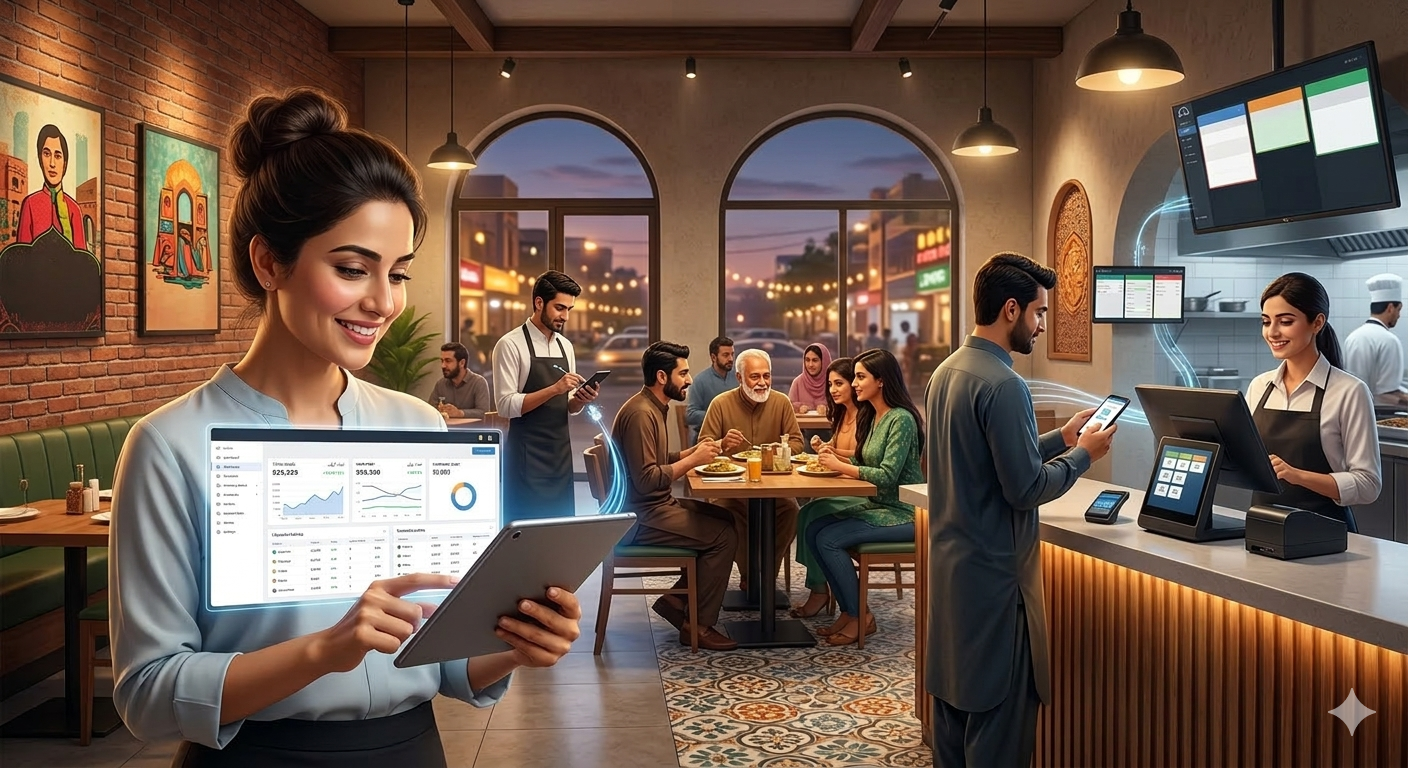
A smarter, faster, and more profitable restaurant operation starts in the cloud. Here’s everything you need to know.
The Restaurant Industry Is Going Digital — Fast
Running a restaurant in 2026 is nothing like it was a decade ago. Between rising labor costs, the explosion of online delivery, and increasingly demanding customers, restaurant owners need more than a great menu — they need smart technology at the core of their operations.
The restaurant management software market was valued at USD 6.54 billion in 2025 and is estimated to grow from USD 7.49 billion in 2026 to reach USD 14.73 billion by 2031, at a CAGR of 14.52%. The driver behind this surge? Cloud technology.
Cloud solutions accounted for 60.87% of revenue in 2025 and are growing at a 14.94% CAGR, far outpacing hybrid and on-premise alternatives. Restaurants of all sizes — from independent cafés to multi-location chains — are making the switch, and for very good reason.
This guide breaks down what cloud-based restaurant management software is, why it matters, what features to look for, and which platforms are leading the pack in 2026.
What Is Cloud-Based Restaurant Management Software?
Cloud-based restaurant management software is an integrated digital platform that lets restaurant owners and managers run their entire operation from a centralized, internet-connected system. Instead of installing software on a local server, everything lives in the cloud — accessible from any device, anywhere, at any time.
These platforms typically cover:
- Point of Sale (POS) processing — order-taking, payments, and receipts
- Inventory management — real-time tracking of ingredients and supplies
- Staff scheduling and payroll — shift planning, timesheets, and wage calculations
- Table and delivery management — reservations, waitlists, and delivery coordination
- Analytics and reporting — sales data, labor reports, and business insights
- Customer relationship management (CRM) — loyalty programs and guest data
The defining advantage over traditional on-premise software is accessibility. Your data isn’t locked inside a physical machine on-site. You can monitor sales at your restaurant from home, update menus across 10 locations simultaneously, or track inventory from your phone between lunch and dinner service.
Why Cloud-Based Solutions Are Winning in 2026
Real-Time Visibility From Anywhere
62% of restaurant managers now use mobile-enabled management applications daily to monitor sales, inventory, and workforce performance in real time. That shift toward mobile-first management is only possible because of cloud infrastructure.
When something goes wrong on a Friday night — a sudden stock shortage or a staffing gap — managers can respond instantly, even remotely. That kind of real-time control was unthinkable with legacy systems.
Lower Costs and Faster Setup
Traditional on-premise software required expensive hardware, on-site IT teams, and lengthy installation periods. Cloud platforms work on a Software-as-a-Service (SaaS) subscription model — lower upfront investment, automatic updates, and no server maintenance.
Over 70% of restaurants now deploy cloud-first platforms to centralize order processing, billing, inventory tracking, and staff scheduling. The shift is particularly notable among smaller operators who previously couldn’t afford enterprise-grade tools.
Automatic Updates With Zero Downtime
POS firmware patches now deploy overnight with zero downtime, eliminating costly store-by-store site visits. This is a massive operational advantage — no more paying technicians to update system locations by location.
Scalability for Growing Businesses
Whether you’re opening a second location or managing a franchise with 50 outlets, cloud software scales with you. Menus, pricing, and promotions can be pushed to every location simultaneously from one dashboard.
Toast alone added 8,000 new QSR outlets in Q2 2024, each requiring a full cloud POS roll-out. That kind of rapid deployment at scale simply wouldn’t be feasible with on-premise systems.
Key Features to Look for in 2026
Not all platforms are created equal. Here are the features that matter most when evaluating cloud-based restaurant management software in 2026.
1. Integrated POS With Omnichannel Ordering
Your POS should handle dine-in, takeout, drive-thru, and third-party delivery all from one system. Omnichannel order management adoption has reached 54% across the industry, and platforms that can’t unify these channels leave money — and data — on the table.
2. AI-Powered Inventory and Demand Forecasting
Manual inventory counts are becoming obsolete. AI-driven forecasting tools have been adopted by 47% of large restaurant groups to improve demand planning accuracy and optimize staff scheduling efficiency.
Platforms that use machine learning to predict which items will sell on a Tuesday versus a Saturday can dramatically reduce food waste and over-ordering — two of the biggest margin killers in hospitality.
3. Staff Scheduling and Labor Management
Labor is typically the largest controllable cost in a restaurant. Cloud-based scheduling tools allow managers to build shifts based on forecasted demand, track hours in real time, and process payroll automatically.
Automated scheduling has been shown to reduce overtime costs by double digits in restaurants that have integrated workforce management into their core platform.
4. Real-Time Analytics and Reporting
Data is only useful if it drives action. The best platforms offer dashboards that surface the metrics that matter — best-selling items, peak hours, table turn rates, and server performance — without requiring a data analyst to interpret them.
Real-time reporting is now used by 63% of operators, making it one of the most widely adopted features in modern restaurant management software.
5. Contactless Payments and Mobile POS
Contactless payment integration has exceeded 71% adoption across the industry. Customers expect to pay via tap, QR code, or mobile wallet — platforms that can’t support these options create unnecessary friction at the point of sale.
6. Third-Party Integrations
Your software should connect seamlessly with tools you already use — delivery platforms like Uber Eats or DoorDash, accounting software like QuickBooks, and loyalty programs. API integrations have reached 61% adoption among restaurant tech stacks, and open APIs are increasingly a non-negotiable when choosing a platform.
Top Cloud-Based Restaurant Management Platforms in 2026
Toast
Toast is arguably the most widely recognized name in restaurant technology. It’s an all-in-one cloud platform covering POS, online ordering, payroll, loyalty programs, and kitchen display screens. Toast secured strong positioning among fast-casual and QSR operators through easy-to-use cloud dashboards and a vibrant partner marketplace.
Pricing: Starter Kit is free (limited features); Point of Sale plans start at $69/month per terminal.
Best for: Fast-casual and full-service restaurants looking for an all-in-one solution.
In early 2025, Toast integrated xtraCHEF into its platform to add accounts payable automation — a strong signal that the company is pushing toward full back-of-house management, not just POS.
Lightspeed
Lightspeed Restaurant is a comprehensive POS system tailored for the restaurant industry, providing a cloud-based solution that is 40% faster than other leading systems in North America. It offers multi-location management, in-depth inventory tracking, and integrations with accounting, delivery, and loyalty platforms.
Best for: Multi-location restaurants and fine dining concepts that need detailed reporting and strong inventory control.
Square for Restaurants
Square is a strong entry point for independent restaurants and new operators. Its intuitive interface and low barrier to entry make it especially popular among cafés, food trucks, and small dining concepts. In February 2026, Block Inc. (Square for Restaurants) introduced contactless kiosks and voice-ordering modules, expanding its self-service capabilities significantly.
Best for: Independent restaurants, cafés, and food trucks seeking an affordable, flexible POS.
MarketMan
For restaurants where inventory is the biggest operational challenge, MarketMan is purpose-built for precision. It automates stock tracking, sends low-inventory alerts, and integrates directly with supplier invoicing. Starting at $199/month per location, it’s a specialized tool for operators serious about reducing waste and improving margins.
Real-World Impact: What Cloud Software Actually Delivers
The Multi-Location Efficiency Gain
A regional pizza chain using Toast synchronized data across 12 locations, gaining real-time insights into sales, labor, and inventory — allowing managers to optimize operations and improve profitability across the entire group.
This kind of centralized visibility is the core value proposition for any growing restaurant brand. Without it, each location operates in a silo, making it nearly impossible to identify underperforming outlets or replicate what’s working elsewhere.
From Reactive to Proactive Management
A mid-sized restaurant group in the UK that moved from a legacy till system to a cloud-based POS with integrated analytics reported a measurable shift in how managers made decisions. Instead of reviewing last week’s paper reports, they were acting on live sales data during service — adjusting staffing, 86-ing slow-moving dishes, and pushing promotions based on real-time patterns.
Industry analyses show restaurants using integrated online ordering see notable sales lifts — SpotOn clients saw a 9% increase in total sales after adoption, highlighting how integration across channels drives measurable revenue growth.
Cloud Kitchens: The Fastest-Growing Segment
Cloud kitchens and virtual brands registered an 18.58% CAGR, driven by delivery-first economics. These formats require multi-brand order routing, auto-fire production queues, and courier pick-up tracking — capabilities that legacy dine-in POS rarely supports.
For ghost kitchen operators running multiple virtual brands from a single kitchen, cloud software isn’t optional — it’s the backbone of operations.
Challenges to Consider Before Switching
No technology is without trade-offs. Before committing to a cloud platform, restaurant operators should be aware of:
- Cybersecurity risks: Nearly 45% of operators cite security concerns as a barrier to cloud adoption. Choose platforms with SOC 2, PCI DSS, or ISO 27001 certifications — these are now considered baseline requirements for reputable vendors.
- Internet dependency: Cloud systems require a reliable internet connection. Build in a backup connection — a secondary mobile hotspot or offline-capable POS mode — to protect against service downtime.
- Staff training: Switching systems mid-operation requires proper training. Factor in onboarding time and ensure your vendor provides 24/7 support.
- Integration complexity: 35% of operators cite integration complexity as a challenge, particularly when migrating from legacy systems with years of historical data.
For authoritative guidance on cybersecurity standards for hospitality technology, the National Restaurant Association’s technology resources offer practical frameworks for operators at every scale.
How to Choose the Right Platform for Your Restaurant
Choosing software is a long-term commitment. Use this checklist before making your decision:
- Size and format: A single-location café has very different needs from a 20-site franchise group. Make sure the platform scales appropriately.
- Core pain points: Are you losing money on inventory waste? Struggling with scheduling? Identify your biggest operational challenge first, then find the platform that solves it best.
- Integration requirements: List every tool you currently use — accounting software, delivery apps, loyalty programs — and confirm compatibility before committing.
- Budget: Factor in both monthly subscription fees and one-time setup or hardware costs. Ask vendors about the all-in total cost of ownership.
- Support quality: Cloud software issues at 7 pm on a Saturday need immediate resolution. Prioritize vendors with 24/7 live support.
For a deeper dive into evaluating restaurant technology ROI, Hospitality Technology’s annual research reports are a trusted industry benchmark.
The Future of Cloud Restaurant Management: 2026 and Beyond
The next wave of innovation in restaurant management software is already in motion.
AI and predictive analytics are moving from novelty to necessity. AI-based analytics adoption has reached 49% and is accelerating as platforms embed machine learning directly into menu optimization, demand forecasting, and waste reduction workflows.
Voice ordering and kiosk integration are expanding rapidly, particularly in QSR and fast-casual formats, reducing dependency on front-of-house labor during peak hours.
Sustainability tracking is becoming a built-in feature — not a bolt-on — as operators face pressure to report on food waste, energy usage, and supply chain transparency.
The restaurant management software market is projected to grow from approximately USD 7.9 billion in 2026 to USD 28 billion by 2034 — a trajectory that reflects not just adoption growth, but deepening reliance on software as the central nervous system of modern restaurant operations.
Frequently Asked Questions (FAQ)
What is cloud-based restaurant management software?
It’s a digital platform hosted on remote servers (the cloud) that lets restaurant owners manage operations — POS, inventory, staff, analytics, and more — from any internet-connected device without on-site hardware or servers.
How much does cloud restaurant management software cost?
Pricing varies widely. Entry-level plans (like Square for Restaurants’ basic tier) can start free or at $0/month with transaction fees. Mid-tier platforms like Toast start around $69/month per terminal. Specialized tools like MarketMan begin at $199/month per location. Enterprise solutions are priced on a custom basis.
Is cloud-based restaurant software secure?
Reputable platforms invest heavily in security. Look for certifications like SOC 2, PCI DSS (for payment data), and ISO 27001. These have become baseline requirements for serious vendors in 2026.
What happens if the internet goes down?
Most leading platforms offer an offline mode that allows basic operations — taking orders and processing payments — to continue during an outage, with data syncing once connectivity is restored.
Can cloud software manage multiple restaurant locations?
Yes — and this is one of its strongest use cases. Multi-location management, including centralized menu updates, consolidated reporting, and synchronized inventory across sites, is a core feature of platforms like Toast, Lightspeed, and Oracle Simphony.
What’s the difference between cloud POS and traditional POS?
Traditional POS systems store data on a local server at the restaurant. Cloud POS stores data remotely, enabling real-time access from any device, automatic software updates, and easier scalability — without the hardware maintenance costs.
How long does it take to set up cloud restaurant management software?
Setup time ranges from a few hours for basic POS configurations to several weeks for full enterprise deployments involving multiple locations, complex integrations, and staff training. Most SaaS vendors offer onboarding support to accelerate the process.
Which cloud restaurant software is best for small restaurants?
Square for Restaurants and Toast’s Starter Kit are the most accessible options for small operators, offering low-cost entry points with the ability to scale up as the business grows. Both offer free tiers with core POS functionality.