
7 Secrets to Writing an eBook That People Actually Read!
In 2026, the digital landscape is flooded with content. From viral TikToks to AI-generated articles, getting eyeballs on anything is...
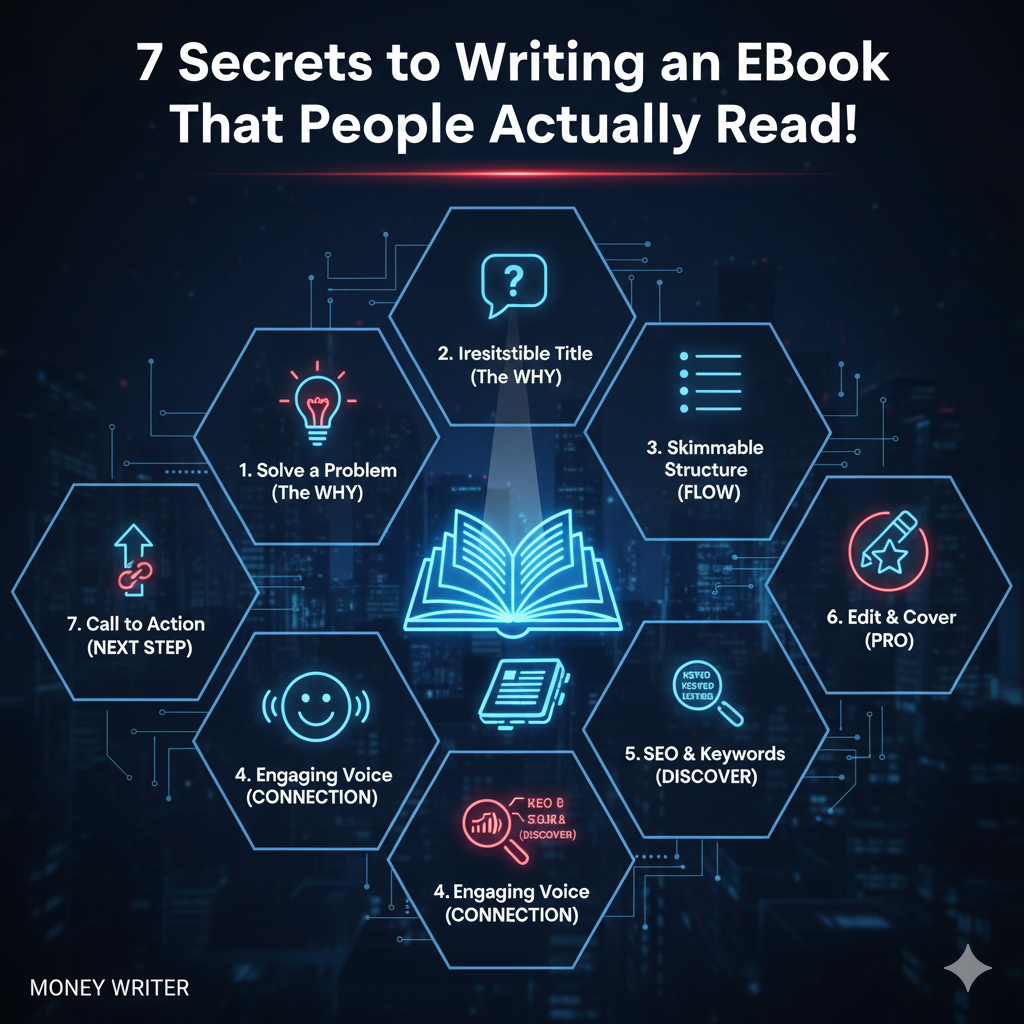
In 2026, the digital landscape is flooded with content. From viral TikToks to AI-generated articles, getting eyeballs on anything is a challenge. So, when you dedicate your time, energy, and perhaps even your soul to writing an eBook, the last thing you want is for it to gather digital dust in the far corners of Amazon KDP. You want it to be read. You want it to make an impact.
The good news? It’s entirely possible. The secret isn’t just about having a great idea; it’s about understanding the psychology of the modern reader and leveraging publishing strategies that guarantee engagement. Here are 7 secrets to writing an eBook that people don’t just buy, but actually read, remember, and recommend.
1. Does Your Idea Solve a Problem or Fulfill a Deep Desire? (The “Why” Factor)
Before you write a single word, ask yourself: “Why would someone need to read this?” In 2026, readers are busy. They’re looking for solutions, inspiration, or escapism. Your eBook must clearly address a pain point or tap into a core desire.
- Informative eBooks: Solve a problem (e.g., “How to Master AI Prompt Engineering,” “The Ultimate Guide to Sustainable Investing”).
- Fiction eBooks: Fulfill a desire for escapism, emotional connection, or intellectual stimulation (e.g., a thrilling sci-fi adventure like Attack of the Phasmii, which taps into fears about digital identity).
2. Is Your Title an Irresistible Hook? (First Impressions Matter More Than Ever)
Your title is the single most important piece of marketing copy for your eBook. It’s the micro-promise that convinces a busy browser to click. In a world of infinite scroll, your title needs to grab attention, convey value, and hint at the compelling content within.
- Use Numbers/Lists: “7 Secrets to…” or “The 5-Step Guide to…”
- Intrigue & Benefit: “Unlock Your Hidden Potential,” “Survive the AI Uprising.”
- Clarity over Cleverness: Don’t be too obscure. Readers need to know what they’re getting.
Actionable Tip: Test 3-5 different titles with your target audience before you publish!
3. Have You Mastered the Art of the “Skimmable” Structure? (Respecting Reader Time)
The modern reader doesn’t read; they scan. They’re looking for quick takeaways, bolded points, and clear sections. If your eBook is a dense wall of text, it will be abandoned.
- Short Chapters: Break down your content into digestible chunks.
- Clear Headings & Subheadings: Use H2, H3, H4 tags to create a visual hierarchy.
- Bullet Points & Numbered Lists: Essential for conveying information quickly.
- Images & Graphics: Break up text and illustrate complex concepts. (Just like we’re doing here!)
Futuristic Vision (2030): Future eBooks might integrate AI-powered summaries at the start of each chapter, or allow readers to “fast-scan” through augmented reality overlays that highlight key concepts.
4. Is Your Voice Engaging and Conversational? (Building Connection)
Unless you’re writing a highly technical manual, your eBook should feel like a conversation with a trusted expert or a captivating storyteller. Ditch the overly academic tone.
- Use “You”: Directly address the reader.
- Share Anecdotes/Stories: Make it relatable.
- Inject Personality: Let your unique voice shine through.
- Ask Rhetorical Questions: Engage the reader’s thoughts.
This human touch is crucial in an era where much content feels robotic. Readers seek connection.
5. Have You Leveraged Keywords and SEO for Discoverability? (The Digital Librarian)
A brilliant eBook is useless if no one can find it. In 2026, eBook SEO is as critical as website SEO. Think of Amazon’s search bar as the world’s biggest library.
- High-Volume Keywords: Research terms your target audience is actively searching for.
- Semantic Keywords: Include related terms that provide context (e.g., if your main keyword is “digital marketing,” also use “social media strategy,” “content creation,” “SEO tactics”).
- Keyword Placement: Integrate naturally into your title, subtitle, description, and chapter headings.
Don’t forget the power of niche categories! The more specific you are, the easier it is for the right readers to find you.
6. Is Your Editing Flawless and Your Cover Irresistible? (Professionalism Sells)
You’ve heard it a thousand times, but it bears repeating: Don’t skimp on editing and cover design. A single typo can destroy credibility, and a homemade cover screams “amateur.”
- Professional Editor: Invest in a copy editor and a proofreader.
- Stunning Cover Design: Your cover is your book’s billboard. It needs to be professional, genre-appropriate, and visually captivating. This is where most self-published authors lose out.
- Formatting Matters: Ensure your eBook is perfectly formatted for various devices (Kindle, Kobo, etc.). No weird line breaks or inconsistent fonts.
7. Do You Have a Clear Call to Action or a Next Step? (The Reader Journey)
Once someone finishes your eBook, what do you want them to do? Your eBook is not an endpoint; it’s a stepping stone in your reader’s journey.
- Encourage Reviews: “Please leave a review on Amazon!”
- Link to More Content: Direct them to your website, blog, or another book (like Attack of the Phasmii if it’s relevant!).
- Offer a Freebie: Download Freebies.
- Join Your Community: Invite them to your newsletter or social media group.
This helps build your author platform and keeps readers engaged with your work.
Your eBook Deserves to Be Read!
Writing an eBook is an accomplishment in itself, but writing one that truly resonates requires a strategic approach. By focusing on your reader’s needs, crafting compelling hooks, optimizing for discoverability, and delivering a polished, engaging experience, you can ensure your hard work pays off. In the ever-evolving world of digital publishing, these secrets are your blueprint for success.
What’s the #1 thing you struggle with when writing an eBook? Share your challenges in the comments below!