
How Long Do Professional Loft Conversion Services Take in Bournemouth?
If you’re considering a loft conversion in Bournemouth, one of the first questions you’ll ask is simple but important: how...
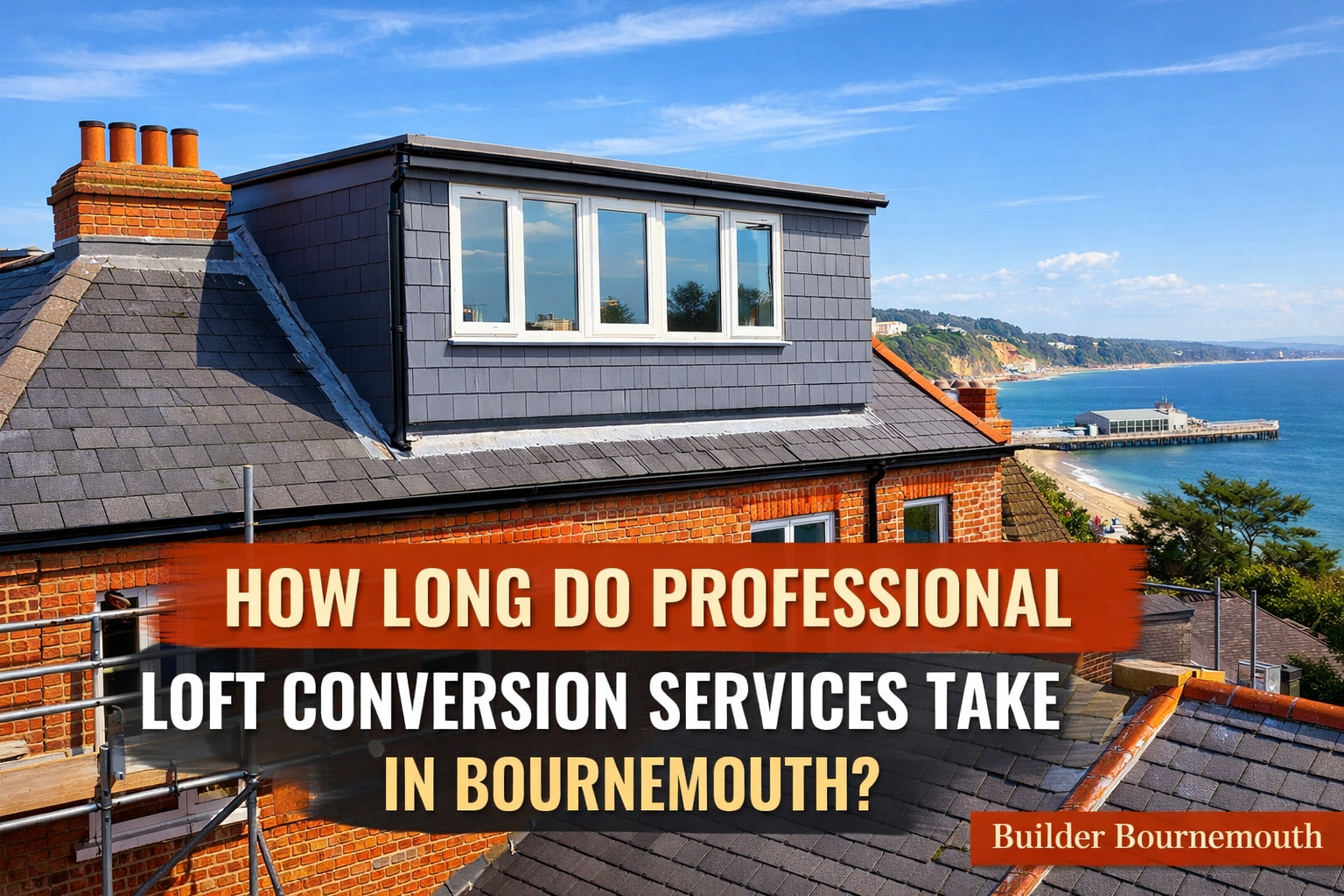
If you’re considering a loft conversion in Bournemouth, one of the first questions you’ll ask is simple but important: how long is this actually going to take? Not the optimistic timeline you hear in a sales pitch, but the realistic one that fits around work, family life, neighbours, and budgets.
The honest answer is that most professional loft conversion services in Bournemouth take between 8 and 12 weeks, but that figure hides a lot of variables. Some projects run smoothly and finish early. Others slow down for reasons homeowners never see coming. This guide breaks down the full timeline, explains what affects it locally, and helps you avoid the delays that catch people out.
The Typical Loft Conversion Timeline in Bournemouth
For a standard residential property, professional loft conversion services usually follow this structure:
- Design and surveys: 2–4 weeks
- Planning permission (if required): 8–10 weeks
- Construction phase: 8–12 weeks
- Final inspections and sign-off: 1–2 weeks
Not every project needs every stage. Many Bournemouth loft conversions fall under permitted development, which can remove months from the timeline.
Stage One: Design, Surveys, and Structural Planning
Before any work starts, the property needs to be assessed properly.
In Bournemouth, older homes often come with quirks. Victorian and Edwardian houses may have chimney stacks, uneven joists, or roof structures that need reinforcing. Coastal conditions can also influence insulation and ventilation decisions.
This stage usually takes two to four weeks, depending on how quickly decisions are made. Delays often happen here when homeowners change layouts repeatedly or wait too long to approve drawings.
A clear brief saves weeks later.
Stage Two: Planning Permission (When It’s Needed)
Not all loft conversion services in Bournemouth require planning permission.
Rear dormer conversions often fall under permitted development. Mansard or front-facing conversions usually do not, especially in conservation areas.
If planning permission is required, expect 8 to 10 weeks for a decision. This happens before construction begins and is outside the builder’s control.
One common mistake is assuming planning can be sorted “along the way.” It cannot. Starting work without approval risks enforcement action and costly redesigns.
Stage Three: Construction Phase Explained
This is the part most homeowners think of as “the build,” and it’s where the 8 to 12 weeks usually applies.
Structural Work (Weeks 1–3): Steel beams are installed, floor joists strengthened, and the roof structure altered. This is the loudest and most disruptive phase.
Roof Alterations and Dormers (Weeks 3–5): Dormers or roof extensions are built, windows installed, and the loft becomes weather-tight.
First Fix Services (Weeks 5–7): Plumbing, electrics, insulation, and fire protection are installed. This stage sets the quality of the final space.
Plastering and Second Fix (Weeks 7–10): Walls are finished, staircases fitted, bathrooms installed, and joinery completed.
Final Touches and Sign-Off (Weeks 10–12): Snagging, inspections, and building control sign-off take place.
Well-managed projects stick close to this schedule. Poor coordination does not.
What Can Slow Down a Loft Conversion in Bournemouth?
Most delays are preventable. Late material deliveries are a common issue, especially when bespoke windows or staircases are ordered too late. Weather can also play a role, particularly during roof work in winter. Another frequent cause is last-minute design changes. Moving a bathroom or altering stairs mid-build adds time and cost every single time. Clear decisions early are the biggest time saver.
How Property Type Affects the Timeline
Not all Bournemouth homes behave the same.
- Victorian terraces: Often quicker structurally, but stair design can be tricky
- Semi-detached homes: Hip-to-gable conversions add time
- Detached houses: Larger scope, longer build
- Flats: Legal and freeholder approvals can add weeks
Professional loft conversion services factor this in from the start. Cheap quotes often do not.
Does a Faster Loft Conversion Mean Lower Quality?
This is where strong opinions matter. A well-planned loft conversion can be efficient without being rushed. A “fast” build that skips drying times, insulation standards, or inspections usually shows problems within a year. The goal is not speed. It’s predictability. Reliable loft conversion services give realistic timelines and stick to them.
How to Keep Your Loft Conversion on Schedule
Homeowners play a bigger role than they realise.
- Finalise layouts early
- Approve drawings quickly
- Order fixtures before work starts
- Avoid mid-build changes
- Choose experienced local contractors
The smoothest projects are always the ones where decisions are made once, not five times.
Is the Disruption Worth It?
Living through a loft conversion is inconvenient. There’s no way around that. But compared to moving house, most Bournemouth homeowners find it far less disruptive. Many projects are designed so you can stay in the property throughout. The long-term gain in space, comfort, and property value usually outweighs the temporary disruption.
Final Thoughts
In most cases, loft conversion projects take 8 to 12 weeks of construction, plus any planning time required. Projects that finish on time are not lucky. They are planned properly. At Builder Bournemouth, accurate timelines, clear communication, and realistic expectations matter far more than shaving a week off the schedule. The best loft conversions are the ones you stop noticing because they feel like they were always part of the house.