Why Tie Boxes Need Different Protective Features Than Tin Containers
Most people who sell ties online eventually get a message from a customer saying the tie arrived with a line...
Most people who sell ties online eventually get a message from a customer saying the tie arrived with a line down the middle. Nine times out of ten, the cause is the packaging. Someone folded the tie in half to get it into a container that was never shaped for it, and a few weeks of sitting that way were enough to set the crease into the silk.
Tins are a common culprit. They look good, they feel solid, and they have a premium reputation, so it’s easy to see why a brand would reach for one. For a lot of products, they’re a great pick. Ties just happen to be a poor match.
What Tins Are Built For
A tin is a rigid metal shell with a tight-fitting lid. It keeps out moisture, survives a drop, and holds its shape for years. You see them around tea leaves, cookies, candles, lip balm, and mints, because those products are either hard or they don’t mind being jostled. A cookie can break in a tin and still taste the same.
Fabric has no such tolerance. Whatever shape it spends its time in is the shape it ends up keeping.
How Ties Get Damaged
A tie is about 57 to 58 inches of fabric, usually silk or a silk blend, with a lining sewn inside and a seam running down the back. Hits and drops barely matter to it. Pressure matters a lot, and so does folding, and so does rubbing against anything rough while it travels. Strong light and dust will slowly dull the color as well.
With that in mind, a good tie box usually does these things:
- Holds the tie flat, or loosely rolled, with no sharp bends
- Keeps it from sliding when the parcel gets thrown around in transit
- Leaves air above the tie so the lid doesn’t push down on it
- Blocks out dust and strong light
- Looks like a gift, because a large share of ties are bought for somebody else
Problems With Putting a Tie in a Tin
Length is the obvious one. Round and square tins are small, so the tie has to be coiled or folded, and tight coils leave marks. Longer rectangular tins exist, but they cost more and still tend to be hard-edged inside.
The rim comes next. Even a smooth metal edge can snag a woven fabric when someone pulls the tie out in a hurry. Then there’s movement. With no tray or padding, the tie slides around with every bump, and the only thing it can slide against is metal.
What a Tie Box Looks Like Inside
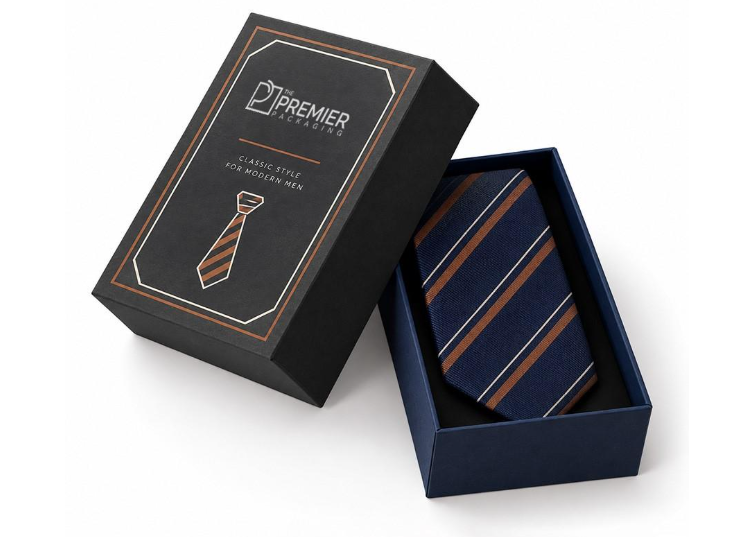
Most are made of rigid or semi-rigid paperboard and are long and shallow. The tie lies in a molded tray or on a soft insert, often with a sheet of tissue over the top, and the lid closes with a bit of clearance. Magnetic flaps, ribbon pulls, and slide-out drawers are common on the gift versions. They give the buyer a nicer moment when it opens and keep the tie steady.
| Feature | Tin Container | Tie Box |
| Material | Metal shell | Paperboard or rigid board |
| Shape | Round, square, or compact | Long and narrow |
| Interior | Usually bare or loosely lined | Fitted tray, insert, or tissue |
| Typical damage to a tie | Creases, rim snags, pressure marks | Rare when sized correctly |
| Weight in shipping | Heavier | Light |
| Opening | Twist or pry | Lift, slide, or magnetic flap |
Where a Tin Is Still Useful
Menswear brands do use tins well, just for other items in the range. Cufflinks, tie bars, collar stays, and small grooming kits all handle metal containers without trouble. A few brands also build gift sets with a decorative tin on the outside and the tie in its own slim box inside, which gives you the look of a tin and the protection of a proper tie box.
Shipping Costs and Storage
Paperboard tie boxes weigh very little and stack flat in a warehouse, so they cost less to store and less to post. Tins are heavier, and when you’re shipping a few thousand orders in a season, the extra weight shows up as a visible line on the shipping invoice. A tie doesn’t gain anything from it either.
The Box Is Part of the Gift
Ties are popular for weddings, Father’s Day, graduations, and office gifts around the holidays. In all of those cases, the person receiving it sees the box before they see the tie. A clean print, a foil logo, or a soft-touch finish makes the whole thing feel worth the money. A flimsy box can make a good tie look cheap.
Ordering Tie Boxes in Bulk
When you’ve settled on a style, the next job is finding a supplier who can produce it in quantity at a fair price. Custom tie boxes wholesale by The Premier Packaging let brands choose their own sizes, inserts, and printing, so you aren’t forced to work around stock dimensions. That helps a lot if you sell skinny ties, bow ties, or sets with extras like a pocket square, since each one needs a slightly different fit.
Final Words
Tins and tie boxes both have a place in a menswear range. For the tie itself, a slim box with a fitted tray will keep it flat and clean much better than a metal container, and the cost difference at wholesale volume is small enough that it rarely matters. Save the tins for the accessories.