Quartz Worktops: A Practical Guide to Choosing the Right Surface
The kitchen worktop is one of the most frequently used surfaces in a home. It needs to cope with food...
The kitchen worktop is one of the most frequently used surfaces in a home. It needs to cope with food preparation, spills, heat, cleaning, and everyday wear while also complementing the overall design of the room. For this reason, material selection is an important part of any kitchen renovation.
Quartz worktops have become a popular option for homeowners looking for a combination of contemporary appearance, practical performance, and relatively straightforward maintenance. Available in a broad range of colours, patterns, and finishes, quartz can suit both traditional and modern kitchen designs.
Understanding the material, its design options, maintenance requirements, and installation considerations can make it easier to choose a surface that works well for a particular kitchen.
What Are Quartz Worktops?
Quartz worktops are engineered surfaces manufactured using quartz-based material combined with other components such as resins and pigments. This manufacturing process allows manufacturers to create consistent colours and decorative patterns that can resemble natural stone.
Unlike natural stone, engineered quartz can be produced in a wide range of carefully controlled designs. Quartz Supply’s current collection includes options ranging from plain and lightly patterned surfaces to marble-effect and heavily veined designs.
This variety makes quartz suitable for homeowners who want a particular visual style without being restricted to the naturally occurring patterns found in individual stone slabs.
Why Choose Quartz for a Kitchen?
One of the main advantages of quartz worktops is their combination of appearance and everyday practicality.
Quartz is non-porous, meaning it does not require sealing in the same way that some natural stone surfaces do. Quartz Supply’s care guidance recommends regular cleaning rather than sealing as part of normal maintenance.
The surface is also highly stain resistant when properly maintained, making it suitable for kitchens where food, drinks, oils, and other substances are regularly handled.
However, quartz should still be treated with reasonable care. Its performance does not mean that the surface is completely resistant to every type of damage.
Choosing the Right Colour
Colour is one of the most noticeable decisions when selecting a worktop.
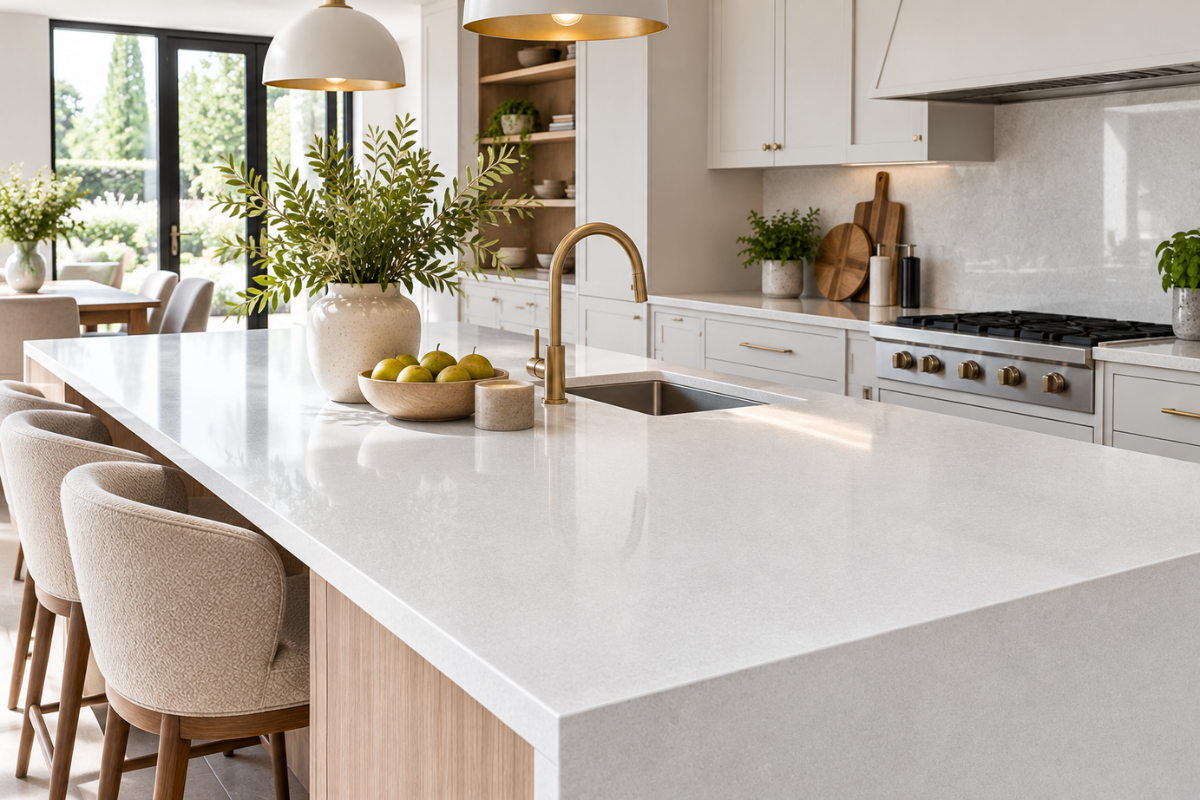
Light-coloured surfaces can help create a bright and spacious appearance, particularly when paired with white, cream, or light-coloured cabinetry. Grey and darker surfaces can provide stronger contrast and work well with contemporary kitchen schemes.
For homeowners who prefer a natural-stone appearance, marble-effect designs are another option. Quartz Supply’s collection includes several marble-effect styles as well as bookmatched designs, giving homeowners more opportunities to coordinate the worktop with splashbacks, islands, and cabinetry.
When comparing colours, it is useful to consider the entire kitchen rather than choosing a worktop in isolation.
Think About Veining and Pattern
Pattern can have a significant influence on the appearance of a finished kitchen.
Subtle veining can create a restrained, elegant effect, while larger flowing veins can become a central design feature. Heavily patterned surfaces may be particularly effective on islands where the worktop has a large uninterrupted area.
Quartz Supply currently lists several Calacatta-inspired and marble-effect designs within its collection, alongside plain and more understated options.
When selecting a strongly patterned slab, viewing a larger section of the material can be useful because a small sample may not show how the complete pattern will appear across an island or long run of cabinetry.
Worktop Thickness and Edge Design
Thickness contributes to both appearance and installation requirements.
A thinner profile can create a streamlined contemporary look, while a thicker-looking edge can provide a more substantial visual presence. The final appearance can also be influenced by the edge profile selected during fabrication.
Because worktops are cut to accommodate sinks, hobs, corners, and other features, thickness and edge details should be considered during the planning stage rather than after the material has been ordered.
Quartz and Kitchen Maintenance
One reason homeowners consider quartz worktops is their relatively straightforward maintenance routine.
Quartz Supply recommends wiping the surface with a soft, wet cloth and a suitable antibacterial surface cleaner, followed by rinsing and drying. The company also recommends checking with the supplier before using specialist or heavy-duty cleaning products.
Avoiding unsuitable chemicals is important because engineered quartz contains resin and pigments that can potentially react with certain harsh substances.
For everyday care, simple and consistent cleaning is generally preferable to aggressive treatments.
Protecting the Surface From Heat
Quartz is designed to withstand normal kitchen use, but direct exposure to very hot cookware should still be avoided.
Quartz Supply specifically recommends using trivets or heat mats rather than placing hot pots and pans directly onto the worktop. Prolonged or intense heat can potentially discolour or damage the surface.
This is an easy precaution to incorporate into everyday cooking and can help preserve the appearance of the worktop over time.
Consider the Kitchen Layout
The shape and size of the kitchen can influence which worktop design is most appropriate.
Large islands provide more uninterrupted surface area, making them suitable for statement patterns and prominent veining. Smaller kitchens may benefit from simpler designs that avoid visually overwhelming the room.
Corners, joins, sink cut-outs, hob cut-outs, breakfast bars, and other details should also be considered when planning the worktop. The pattern and slab layout may affect how these features look after fabrication.
Installation and Templating
Professional templating is an important stage in the installation of a stone worktop.
Quartz Supply describes a process in which measurements are taken to create an actual-size template before installation. Its current information states that, once the material and price have been agreed, installation is generally planned within a 5–7 working-day period.
Actual project timelines can vary depending on the kitchen, material availability, fabrication requirements, and installation schedule.
Accurate measurements are particularly important because quartz slabs are fabricated around the existing cabinetry and appliances.
Matching Quartz With Other Materials
A worktop does not have to match every other element of the kitchen exactly.
Instead, consider creating relationships between colours and textures. For example, a neutral worktop can complement colourful cabinetry, while a dramatic stone pattern can become the focal point against simpler cupboard doors.
Splashbacks, flooring, cabinet handles, wall colours, and appliances should all be considered when selecting a worktop finish. Looking at these elements together can help create a more cohesive design.
Commercial and Residential Applications
Although kitchens are one of the most common applications, quartz surfaces can also be used in other interior settings.
Quartz Supply states that it works with both domestic and commercial clients, including applications in bars, restaurants, and hotels.
The same principles apply across these settings: the material should be selected according to the intended use, design requirements, fabrication details, and maintenance expectations.
What to Consider Before Choosing
Before ordering quartz worktops, homeowners should consider:
- Kitchen dimensions and layout
- Cabinet colour and style
- Desired worktop thickness
- Surface finish
- Veining and pattern intensity
- Sink and hob positions
- Edge profile
- Maintenance requirements
- Heat protection
- Installation and templating
- Overall budget
It can also be helpful to view physical samples or larger slab sections before making a final decision, especially when choosing a strongly patterned design.
Conclusion
Quartz worktops offer a versatile combination of engineered consistency, design variety, stain resistance, and relatively simple everyday maintenance. Their extensive selection of colours and patterns allows them to work across many different kitchen styles, from understated contemporary spaces to more traditional interiors. For homeowners looking to combine the appearance of natural marble-inspired stone with the practical characteristics of engineered quartz, calacatta quartz can be one design option worth considering when comparing available worktop styles. Good maintenance remains important, particularly when it comes to protecting the surface from excessive heat and unsuitable cleaning chemicals. Careful planning during templating and fabrication is equally important for achieving a precise finished installation.